
History of TATA Division
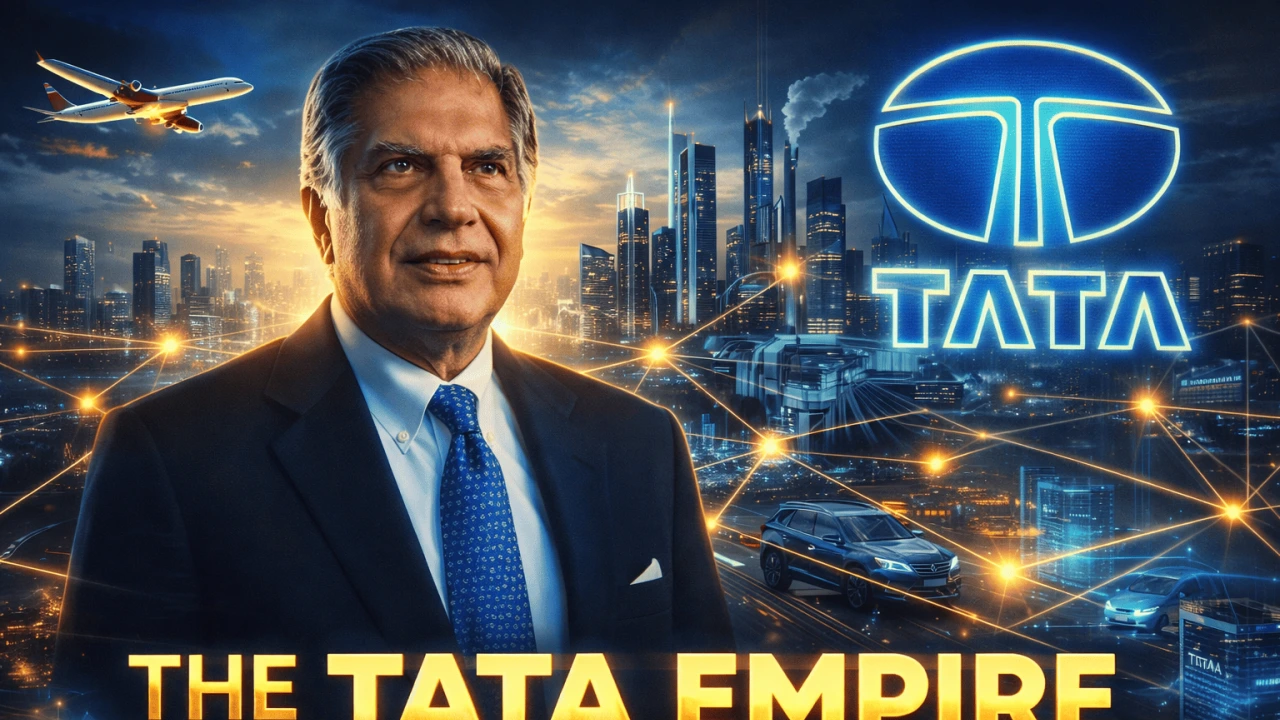
150 years ago a small cotton trader dreamed of changing India Completely unaware that one day his dream would give birth to such a business empire. Which will not only change India but will also win the hearts of crores of Indians. This is the story of Tata Group, get ready to be inspired. Er 1839 Jamshedji Tata is born Jamshed ji completes his education in 1858 And started doing cotton trading business with his father.
In the next 10 years, despite many difficulties, his business becomes very big. But Jamshed ji was not satisfied by trading only cotton. He wanted to manufacture clothes from dug cotton. Therefore in 1877 he set up the Empress Mill at Nakpur and Started manufacturing but there was a problem, the workers there were not very serious about their work.
Every day 20 percent workers were absent, took weeks off and were unable to work for long. Jamshed ji came up with an innovative solution for this, he created a provision for the workers, he launched the scheme of provident fund for the workers, which means now the workers were going to get pension after retirement, secondly he got the workers medical insurance done, and finally organized events like family days and sports days, the workers who performed well in these events were also rewarded in front of everyone, due to all these initiatives the workers started feeling very valued, due to which Both their attendance and performance improved significantly. The workers started feeling valued due to the initiative, which improved their attendance and performance.
Both of them improved a lot and many of these schemes were so futuristic that by then they were not adopted all over the world. In his eighties, Jamshed ji saw the growing demand for independence in India. Jamshed ji believed that to be independent and to sustain independence, India would have to become economically self-sufficient and all essential products would have to be made in India.
Therefore, he started building more Indian businesses in different areas. He first started strawberry farming in the mountains of Panchgani. The impact of which was that even today Panchgani is known for strawberry farming and jam factories. Jamshed ji also observed that the weather of Bangalore and Mysore is like France.
Therefore, he brought silk worms bred in France to India. He bought land in Bangalore and Mysore, started Tata Silk Farm Organization and got silk worm breeding done from local farmers. It was through his initiative that India got popular products like Mysore Silk and Bangalore Mysore Silk Saree. Jamshet ji loved his home town Bombay very much and knew that it was very important to have a world class hotel there for the development of the city.
Therefore, he started building The Taj Mahal Hotel in 1898. He personally participated in the construction and design process. His vision was that the hotel Every room faces the sea and guests feel as if they are floating in water. The hotel was built in 1903. Opened to the public for the first time, it became the first building in Bombay to have lights and electricity.
Jamshed ji took many other such initiatives but his most impactful initiative was to start a steel business. Steel was needed to develop every industry in India like construction, railways and manufacturing. Therefore his dream was to open a steel plant in India itself. He spent 17 years of his life in finding high quality iron ore in India.
Because iron is the most important raw material for making steel, But sadly, Jamshed ji had to face continuous failures because iron is the most important raw material for making steel. faced continuous failures Then ultimately in 1899 them in Bengal province rich iron ore reserves found After which he immediately started iron ore mining.
and setup a steel plant started but unfortunately Jamshed ji himself in India through his own eyes Couldn't see steel being made Because he breathed his last in 1904 at the age of 65, Jamshed ji's vision was that he could not see steel being made in India with his own eyes. Because in 1904, at the age of 65, he breathed his last.
Jamshed ji's vision and his dreams were so grand that it was not possible for them to be fulfilled during his lifetime. Therefore, his son Turab ji Tata took the responsibility of fulfilling all his other dreams. Jamshed ji believed that India was far behind western countries in scientific research and education.
He wanted to establish such an institution in India that would produce world class researchers and scientists. Therefore, Durabji Tata took the help of the Maharaja of Mysore and established the Indian Institute of Sciences in Bangalore in 1909. Nobel Laureate CV Raman became the first director of ISC. Going forward, ISC has made significant contributions in the development of India's first super computer, Param and India's first indigenous aircraft, Da Hansa. It wants business leaders who can take the country's economy to the next level by building businesses.
And to make these business leaders Recently an innovative in India business school has opened such a business school where students get such CXOs and business leaders will teach Who himself founded companies like Uber and Myntra business worth thousands of crores for I'm talking about scalar 18 months of School of Business post graduate program in management and tech students here Will have to work in such real world projects Which are from real companies themselves Will source our own building business here curriculum
Will be a plus to your business Fund raising by pitching to VCs Scaler will also get opportunity education industry since last 7 years and so they already have There are more than 1200 placement partners, this is something that no other business school is currently offering, you will get the opportunity to be placed in leadership positions with these partners and there is a mandatory internship of 3 months, Scalar has achieved 96% placement rate in its online programs and the median CTC is 25 lakhs.
currently scalar school of business Starting in early September For your founding cohort Only 75 students are going to be handpicked. The best part is that if you apply now You can also get scholarship up to 100% So just given in description or comment section link to scalar school of business apply now let's come back to the story Apart from education, Jamshed ji has also used the link to generate electricity. Apply for Scaler School of Business. Now coming back to the story, apart from education, Jamshed ji.
Had ever dreamed of a hydro electric plant to generate electricity. Goha in this project Power generation was to be done by using Dudhsagar Falls located on the Maharashtra border. Dorab ji involved 7000 workers and got artificial lakes, dams and channels built. The plant was ready in 1911 and you know this power by the name of Pagar. Finally, Durab ji Tata also took the responsibility of completing the work of the steel plant which was started by Jamshet ji. In 1907, he To establish a limited company and for the steel plant
IPO of Rs 23 crore announced At that time due to the Swadeshi movement Nearly 8000 in just two weeks people invested in it Company Name Tata Steel and Iron Company i.e. TISCO was kept and finally in 1912 By producing the first steel from TISCO It came out only after two years In 1914, World War I started and Britain's steel demand suddenly shot up. They needed steel for tanks, trucks, railways. TISCO's plan worked day and night and fulfilled this demand. After the end of the war, the Viceroy of that time acknowledged the contribution of TISCO and the town where TISCO's plan was located was named after Jamshed ji. up jamshed
Pur and the name of the railway station Tata Nagar was kept as Durab ji's. Tata Group's business in leadership had increased many fold in 1932 Durab ji Tata died And before leaving he told Tata Group Steel, Power, Consumer Products, Businesses like banking and insurance Durab ji Tata had diversified into businesses like banking and insurance. After Dorab ji Tata, a young member of the family, Giordi Tata, became the chairman of Tata Group in 1938.
Giordi Tata had joined the business in 1925 and was learning work in the TISCO plant. He was always very interested in aviation, so in 1932 he started Tata Aviation Services, which became the first airline in India to provide passenger and cargo transport services. Its first flight was flown by JD Tata himself. After which they had to import essential chemicals like India's first ever commercial pilot soda from outside, these were the chemicals which were used in making glass textile.
They were very important for making essential products like soaps and detergents. He wanted these chemicals to be To be produced in India only, that is why in 1939 he set up a chemical plant in Mithapur Town, Gujarat. Built and that's how Tata started Tata Chemicals which today also manufactures Tata Salt.
Chemicals business started doing well But JRD's dream was still to grow the airline business. During World War II the British Government seized all the planes. Due to which Tata Aviation Services closed overnight But as soon as the war ended, JRD decided to enter the airline business again. And this is how Air India started in 1946 Air India crew was known for their warm and attentive services.
The food, cleanliness and in-flight entertainment of their flight were all top class. Even their mascot was a Maharaja Which reflected the Indian hospitality and royal standards of the airline. Air India always operated as per the time schedule. Due to all this not only in India but also internationally Air India was known as one of the best airlines JRD was growing Air India like his own child.
But then something happened which took away this Air India from them in one fell swoop. After Independence, the Indian Government snatched away the Socialist Economic Model. After Independence, the Indian Government snatched away the Socialist Economic Model. Had adopted the one whose country was to be killed.
Important industries like Transportation Government Controls should be in so that these industries Pay more for public service than profit Focus and so in 1953 Nationalize Air India i.e. taken under government control Air India after nationalization A tragic decline has begun service, punctuality and safety negatively impacted due to which ultimately Air India has status of world class airline Lost but Air India's setback Even after GRD Tata No stone was left unturned to grow the group He saw that after independence
Any Indian in any country There is no cosmetics brand, so he saw that even after independence, there is no Indian cosmetics brand in the country, so he started Lakme. Lakme is a French word which means Lakshmi in Hindi. Jayadi deliberately did not give an Indian name to this brand. He knew that Indian women were inferior to foreign brands and considered foreign brands to be of high quality, so by naming Lakme, he took this cosmetics brand to the international level.
Gave aspirational value but in reality the meaning of Laker was still deeply connected to India. Apart from this, GE bought a railway engine manufacturing factory in Jamshetpur and started Tata Locomotive. And Engineering Company Limited, which was later transferred to Tel. Initially Telco used to manufacture steam engines only for railways but JIA soon expanded into truck manufacturing. He launched Tata 407 truck which became quite popular for its slim and strong design and captured 70% market share by beating the international brands. Today we all know this Telco company which manufactures engines and trucks as Tata. know by the name of motors
Apart from business, Giardi Tata helped India in its most difficult times. During the Indo-China War of 1962 and Indo-Pak War of 1965, he assured all kinds of support to the government. He sent Tata engineers to Delhi to provide military aircraft to the country. He used his Air India experience and designed the Indian Air Force.
year defense preparedness plan also made in this report signaling equipment Requirements for radar and spare parts were included by the government and the Indian Air Force. This report helped a lot considering the contributions of JRD Tata. The President of India also gave him the posting of Honorary Air Commodore in the Indian Air Force.
By 1991, Gerdy Tata had taken the number of Tata Group companies to 84. The revenue was Rs 24,000 crore and there were 2,70,000 employees. But now at the age of 87, the time had come for him to hand over the command of Tata Group to someone else. Therefore, Jerry Tata had appointed a promising member of the Tata family as the new chairman to hand over the command of the Tata Group to someone else, therefore, Jerry Tata chose a promising member of the Tata family as the new chairman and this new chairman was Sir Ratan Tata.
About 30 years before becoming the Chairman, Sir Ratan Tata was studying architecture in USA till 1962 when he received a letter from J. A. Tata in which he was asked to come to India and join the business. Ratan Tata came to India and founded Tata Steel. joined and was a normal worker there started working like Seeing his dedication and business talent They were given big responsibilities one after the other.
Started meeting before becoming Charmin He saved Empress Mill from losses. made profitable by extracting A major labor unrest in Telco was successfully resolved And Tata's NELCO company Which used to make radio and television etc. Its revenue is from 3 crores was increased to Rs 200 crore When Sir Ratan Tata in 1991 When he became a cherman he knew That Tata Group looks good from outside performing but in reality He was lagging behind in many things They felt that the Group was lagging behind in high technology like computing and AI and the Group was doing the same but in reality it was lagging behind in many things. They felt that the Group was lagging behind in high technology like computing and AI.
Like the group is far behind in computing and AE and the group has not done anything unique for a long time, that Tata He wanted to do something revolutionary for the group through India. With this mindset, he saw that India Ratan Tata did not have any car in which everything from design to production was done in India, so in 1995 Ratan Tata decided to make a 100% Indian car.
A car which is spacious, futuristic, affordable and gives high mileage, But there was a problem, The cost of setting up a new manufacturing plant was around 2 billion dollars, Which was a huge amount, That's why Tata Motors gambled, And an old Nissan plant in Australia was bought for a huge amount at one fifth the cost, so Tata Motors gambled, and an old Nissan plant in Australia Bought the plant at one fifth cost, By dismantling this entire plant Brought to India, and in Pune Rebuilt by Ratan Tata One of the best in designing your own car
Important rules followed, and finally car in 1998 Launched, this is an Indian car was, so to name it Indi was taken from Indian and Ka was taken from car and Indica was created by combining them Tata Indica Auto After Mobil, Ratan Tata focused on technology. He saw that the focus of TCS was in providing administrative services to Indian companies like data entry and book keeping which was a very basic level work, hence Ratan Tata shifted the focus of TCS from administrative services to software services. This was a very basic level work, hence Ratan Tata By shifting the focus of TCS from administrative services
brought to software services After which TCS India And even for the world's biggest organizations Started making customized softwares Ratan Tata also brought TCS IPO Due to which the company got funding to expand. And with these steps even today TCS is India's biggest IT company. After the success of TCS, Sir Ratan Tata focused back on Tata Motors.
He observed that the majority of India's middle class population cannot afford a car. That's why the whole family is forced to travel congested in a scooter. which was very uncomfortable and unsafe Sir Ratan Tata's dream was to make the Indian middle class transition from a scooter to a car, that is why he announced that he will launch a car whose price will be only one lakh rupees.
Keeping his promise, in 2009 he launched Tata Nano at a price point of Rs 1 lakh but unfortunately Nano proved to be a failure. The biggest advantage of Nano was its cheap price but this became its biggest disadvantage. In India, people see a car as a status symbol. Anyone who owns a car is considered successful.
But due to Nano's cheap price and its design, people have called it the world's cheapest car match box and even covered. Branded it like an auto rickshaw, where other car owners used to feel proud of their car, the same is true of Nano. Owners are worried about their car felt and hence nano Proved to be a failure but Tata Motors worried about this failure learned a lot about behavior Which can also be seen in their line up today Today Tata Motors is part of Tata Group.
highest revenue earner The company has finally become Sir Ratan Tata Deeply has become a high revenue earning company. Finally, Sir Ratan Tata deeply wanted that Indian companies need not just India Rather we should do business all over the world And so to expand into foreign markets They started acquiring foreign brands one after another Like to expand Tata Motors in the global luxury market They acquired Jaguar and Land Rover Acquires British brand Tetvar to expand in global tea and coffee market British brand Tetley to expand in global tea and coffee market
and US brand Eto Clock Coffee. acquired Similarly every major company of Tata Like Tata Steel, TCS, Tata Chemicals And I&C L also made acquisitions And today because of these decisions More than half of Tata Group's revenue comes from outside India Under the leadership of Sir Ratan Tata, the Tata Group has earned more revenue from outside India. The list of what the Tata Group has achieved under the leadership of Sir Ratan Tata is very long, whether it is Titan making the world's slimmest watch, TCS making the world's one of two most powerful supercomputer or disrupting the television market by launching Tata Sky. Tata Group has achieved success in almost every area. Sir Ratan Tata says that If you want to go fast then go alone but if you want to go far then take everyone along. Tata Group has always done business with this philosophy. On one hand it has built big companies and on the other hand it has also built schools, colleges and hospitals. Tata Group has always walked along its investors, its employees, its customers and ultimately its country.
And that is why today he gets many times more respect from people than whatever success he has got.
Is boAt Losing Market Value?
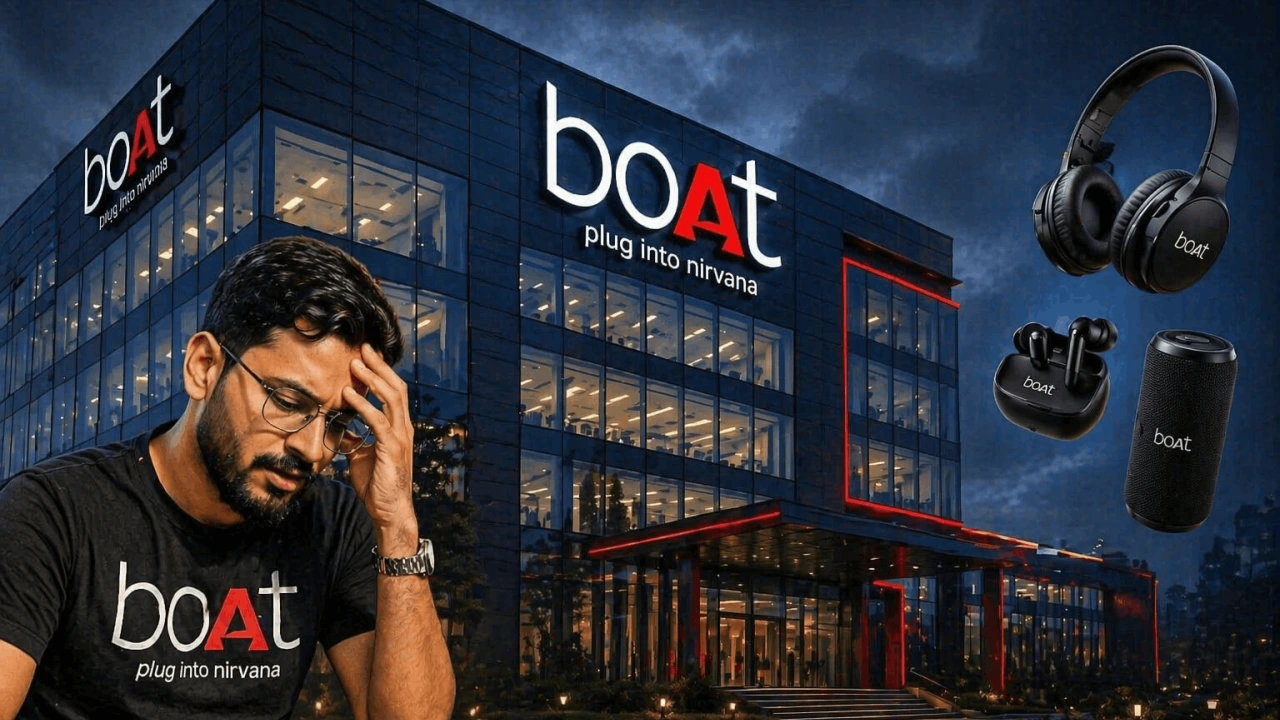
In the year 2020, BOAT had become the fifth largest wearable brand in the world. It had beaten all the Indian brands and was in the leagues of Apple, Xiaomi and Samsung. Then, between FY20 and FY23, BOAT's revenue increased from Rs 700 crore to Rs 3400 crore. And that's a 5x growth in just 3 years. BOT's smartwatches and their earphones were everywhere.
And Aman Gupta was one of the most celebrated entrepreneurs in India and his company was getting ready for a blockbuster IPO. But then things started to change. BOT's revenue started to fall. It started losing to other players in the segment.
In fact, things got so bad that both its co-founders Aman and Sameer quit their positions and moved to known executive roles. So what exactly went wrong with BOAT? And what does the future look like for the company? Welcome to our weekly Indian startup news show. I'm Pankaj, your host, and you're watching Backstage with Millionaires. So, let me take you back to where this story really starts, which is not 2014 when BOAT was founded, but in 2020, when Bat really took off.
See, when the pandemic hit, Boat was already an established and growing brand, but COVID helped them accelerate at an unprecedented pace. The screen time for people grew multifold. Also, almost everyone was working from home. And because of that, people needed headphones. In fact, demand for audio products grew 20% in the early months of pandemic alone and Bode, which had spent years building the most recognizable and affordable audio brand in India, benefited from it the most.
But that wasn't the only wave Bode caught in 2020. As people started tracking their health obsessively during the pandemic, smartwatches suddenly became a mass market product. And Bode saw this as an opportunity and launched their own smartwatch line in October 2020.
And this wearable segment of theirs, which did not exist until 2020, went on to bring 900 crore rupees in revenue within the next two years, which was nearly a quarter of everything the company made. And thanks to these two waves and Aman Gupta being on Shark Tank, Bote had crossed 3376 crore in revenue in FY23. But then things started to change. The two waves that Boat was riding suddenly started to disappear.
And let's first talk about their smartwatch business. See, once the hype of smartwatches started to fade after the pandemic, people started evaluating their smartwatches more critically. And what they found was that these entry-level smartwatches, the kind that BOTE made, which were typically priced below Rs 2,500, did not really have the most accurate health tracking.
Basically, the consumer expectations from these products had gone up, but these products failed to keep up with the consumer. And as a result of this, the smartwatch market started shrinking in India. In FI24 alone, it collapsed by 34% and Bote was the most impacted company. Bote's smartwatch segment that brought in 901 crore rupees in revenue in FI24 had gone down to just 330 crore rupees in FI25, a 63% decline in just one year.
But the thing to understand here is that consumers were not necessarily ditching smartwatches entirely, they were just ditching the low-quality ones. And I'm saying that because the market for premium smartwatches had essentially doubled during this time. The kind of smartwatches which are priced over 20,000 rupees. A segment where players like Apple and Samsung exist.
So, smartwatches was the first bad news for Bode. Next came its audio business. The segment that had essentially made BOAT also started declining. And I think this is a more deeper and existential problem for BOAT. See, when BOAT had built their reputation, they had a genuine edge. They were selling affordable products with cool designs.
But that edge is now gone. It worked for BOAT when they were the only player. But today, they have a tough competition from a bunch of new age Indian brands like BOAT Audio and Noise, along with international brands like Realme, Nothing and OnePlus. Basically, this category is being commoditized right now.
And when a category commoditizes, the brand that's perceived as affordable is usually the one that gets hurt most. And the culmination of all this happened when the two people who built Bolt, Sameer Mehta and Aman Gupta, decided to quit and transition to a non- executive role. And now the company has brought in a new CEO. In fact, Boat has changed three CEOs in the last three years. And that's not good for a brand that's already losing its market.
So is this the end for Boat? Or do they have a plan? Well, sort of. According to the DRHP, Boat now wants to focus on the premium segment, products above 5000 rupee range. And the company now wants to focus on building better technology instead products above 5000 rupee range.
And the company now wants to focus on building better technology, instead of just playing on the price. And that is the right direction. The premium audio market is where the growth is. But the problem with this segment is that it is owned by Apple, Sony, Samsung, and JBL. And competing with these brands won't be easy. All of them have spent decades building credibility for premium audio.
And BOAT has never competed at that level. And now repositioning a brand that builds its reputation on affordable and trendy to suddenly play in premium is one of the hardest things to do in consumer electronics. And before I wrap it up, let's quickly talk about their IPO. See, when they were at their peak.
And at that time, they were planning on raising 2000 crore rupees. But the company decided to postpone it because of bad market condition. Then they again filed for an IPO in 2025. This time with the plans of raising 1500 crore rupees. But again, these plans were postponed. And we don't know when the company will finally go public.
Also, there are some concerns with their DRHP as well. Boats own auditors have flagged that Boats quarterly returns filed with the banks did not match the company's internal books. And that too for three consecutive years. And that raises a lot of concerns. See, trying to go public with three years of bank versus book mismatches is not the best story to tell to the public market investors.
And that at a time when your revenue is also falling. So right now, Boat might have a plan, but they don't seem to have the right people to execute that plan let me know what you guys think do you think both will be able to make that transition or will it just suffer the same fate as someone like lava or micromax all right next up urban company has just announced that their quick housekeeping vertical insta health has crossed 1 million monthly bookings in march and that's a big number especially considering the fact that they had launched this business vertical
just one year back. And now the company is calling it their fastest scaling business unit in their history. And since they announced these numbers, their share price has climbed over 10%. Now, if you look at the service, it's pretty straightforward. They have on-demand cleaning, dishwashing, laundry, and meal prep, all fulfilled in 10 to 15 minutes from booking.
And the service right now is only live in cities like Mumbai, Bengaluru, Delhi NCR, Hyderabad, and Pune. But here is where it gets interesting. This space is starting to look a lot like what happened with QuickCommerce a few years back, where you had new players coming up every day. Also, investors putting in millions of dollars to help these companies scale fast, and the media still questioning if this is even a profitable model.
Now, coming to this house help market, Urban Company's Instahelp currently leads this market with 49% market share, while Snabbit is next with 36% market and Pronto is at number 3 with 14% market share. But the thing to note here is that startups like Urban Company are burning money right now to acquire this market. In quarter 3 of FI26, Arvan company registered an EBITDA loss of 61 crore rupees. And same is with Snabbit and Pronto.
So the growth and all is good. But the real question is still the same as it was in the quick commerce. Will anyone be able to make this profitable at scale? Alright, moving on to some quick news updates. B2B manufacturing platform Zetwork has confidentially filed for their IPO papers and they are looking to raise around Rs 4,200 crore or almost $450 million.
The company was founded in 2018 and they basically help connect businesses with contract manufacturers across sectors like electronics, aerospace and industrials. The company posted operating revenue of Rs 12,798 crore in FY25 with a net loss of Rs 371 crores. Talking about IPOs, furniture and electronic appliance rental platform Rentomojo has filed for DRHP with SEBI to raise Rs 150 crore in their IPO.
But one of the co-founders, Ajay Nain, has filed a petition with NCLT claiming that he was misled into selling his 9.41% stake to an employee benefit trust back in 2023. And now, Ajay wants to void that share sale, restore his shareholding, and stop the company from its planned IPO. Alright, next up, Mirza International's MD Tauseef Mirza has acquired a 100% stake in D2C casual footwear startup called Solthreads.
And this company is already clocking a monthly run rate of 6 crore rupees and this deal will help mirza international to expand into india's youth focus semi-premium footwear market all right now let's move into the funding news segment for today's video this week indian startups raised a total of 47 million dollars which is significantly lower than last week's 268 million and now let's take a look at some of the startups that have raised funds this week. The first one I want to talk about is Batchat, which is a simple app that helps you
save small amounts of money every day automatically instead of big monthly investments. Basically, what they do is they take tiny amounts like 50 to 100 rupees via UPI and invest them in mutual funds. So even people with irregular income can build savings easily and they've raised 12 million dollars in their series A round.
Following that, we have Mumbai-based Amaha, which is an online mental health platform where you can talk to therapists, get medical help, and use self-care tools all in one place. And they've raised 50 crore rupees or $5.35 million. After that, we have the D2C nutrition brand Beast Life that sells things like protein powder and supplements. And they've raised 20 crore rupees or $2.
million in their pre-series a round next we have cyber security startup called sign3 which is an ai powered fraud prevention platform and they help banks fintechs and online businesses to spot and stop scammers by analyzing device data and user behavior like typing patterns or mouse movements and they've raised 1.
million dollars and finally we have epic an online e-commerce platform that lets you try gadgets at home before you buy them what they do is they basically send someone to your house with the product so you can test it in real life and decide whether you wanna buy it it's basically an online shopping with a real world trial experience and they've raised one million dollars in their pre-seed All right, that's all the startup news I have for you this week. Thank you so much for watching and I'll see you in the next one.
What is DRHP? IPO Filing Process Explained with SEBI Rules (2026 Guide)
How to bring IPO on your public high demand. For a long time now I have been seeing in my readers sir how to bring IPO, how to bring IPO, how to bring IPO. So today I have brought for you a detailed content in which IPO is what it is, how it is brought, what is the process, what is the eligibility, should it be brought, should it not be brought.
Now where to get the money? The first option is to bring your own money, brother, I have brought it and invested it, but there is a limit to how much you have invested. Then second, if you don't have your own money, invest the loan money, then let's take the loan, loan money also came and invested, but how much has been invested, there is a limit, then second, if you don't have your own money, then come on.
If you invest the loan money, then come on, you have taken the loan, you have invested the loan money too, but there is a limit too. And there is a small risk in the loan money, isn't it, brother, as long as the company is running Profit is coming, we are having fun, there is no problem, we will pay the interest also, we will also pay the bills, but tomorrow if brother or the company goes into minus or goes into loss and if the system Even if there is no profit, you will have to pay interest on the loan, you will still have to repay the loan.
It is necessary to repay, that is, the loan money is a risk money, yet this is the third option. Option where the risk is less then the third option comes equity. Those who say that brothers of equity, if you do one thing then it is mine. Take shares in the company and this share can also be done in two ways. The first way is private, in your own home.
Friend brother brother uncle call him or call any high net worth individual a person with money or wherever VC firms come, Avenger Capitalist, PE, Private Equity, these big firms come, where VC firms come, venture capitalist, PE, private equity, these big firms come. Told the firm, brother, do one thing, take 20% share in my company and in return assume the ownership of my company.
You have calculated the valuation, it is Rs 100 crore, take 20% of it, give me Rs 20 crore, now use this Rs 20 crore. Look, what is the benefit, if your company runs ahead, it will be profitable, then in every coming profit, that guy will have to give 20% of the valuation of every company. I have given the lion's share of the deal, so neither you have to give the money back nor you ever have to pay interest on that money, so if you look at it, it is a kind of free money. Yes, we have sold our company in return, so if in future we earn a hundred crores, we will have to give 20 crores also, brother, we will have to give in profit, we will keep giving it in the future.
The question comes, Raul ji, what is IPO? IPO is the same thing that if you sold the equity of your company to some limited people, you sold it to the people. So this is private placement That's okay, I took it from this lady, I took it from that lady, I took it from this lady, I took it from that lady.
But when you say the same share or not I do not give to any private group or private person. I also want to share with the general public. it is called IPO I hope it is clear, now a question comes, Raul ji, why not go to IPO, why not go private? That is why one should not go private, although many people go, all the start-ups are private, less go to IPO, but what is the problem in this, there is such a person who will keep monitoring every single thing in your business, that brother, tell me in every third, which decision are you taking? Well, by asking this, tell me why you are doing this, everything in the business. But he will keep monitoring that brother, tell me every third time, what decision are you taking?
Well, ask this question and tell why he did this, he did that, for accountability, he is the 20% owner. Brother, a person has come on the board who looks at every decision and asks questions on every decision. People say, I don't want such a hassle, so I have to sell those 20% shares, but if instead of these 20% shares being sold to a few two people, if I give them to two hundred thousand people, then I have issued 20% shares in the market. Now, instead of someone buying two shares or four shares, everyone has bought four shares. All are owners, but they are not raising my questions every day. They are not checking everything, that's why I come with an IPO. Let's talk sir, am I eligible to bring IPO? These IPOs are brought by big people. Now we are hearing that you are talking about LIC. Am I eligible to come in this protocol? These are IPOs only big people bring.
Right now we are hearing that Nika brought IPO, Policy Bazaar came and these are very big brands. Don't we bring the wisdom of small people, please see, big people bring big IPO, small people bring small You can bring it, you can definitely bring it, so if I talk, you will have to be listed on any exchange to get iFuel.
India's best exchange NSC, DSC both of these Go to any of these and get listed Sir is there any eligibility criteria for this See different eligibility of different boards There are criteria but if I If I give an example of an NSC then the criteria of NSC What is important is that even if you have to come up with an IPO, you must have a minimum seed up capital of Rs 10 crore.
There should be shares worth Rs 10 crore whose money has come in and shares worth Rs 25 crore which you mean. When the share is listed and after listing its valuation should be above Rs 25 crore. Sir, now many people say that 10 crores will become 25 crores but many people say that 10 and 25 are not even there, now let's go.
Sir don't worry BSE has one main board IPO. Where BSE works in Excel BSE has created a SME Board Where even SMEs can bring IPO There his requirement is that your paid up capital It should be above 3 crores And it cannot go above 25 crores, it means that your seed up capital should be above 3 crores and should not go above 25 crores.
This means that even if your market cap is between Rs 3 crore to Rs 25 crore, you can easily bring in Yes, for this, Sir, Eligibility Criteria said, Sir, if your net worth is Rs 3 crore or more, then you can If you are eligible, then what is your net worth? Total assets minus total liabilities. If it is more than Rs. 3 crores, then what is your net worth? If it is more than Rs. 3 crores, then what is your net worth? Total assets minus total liabilities.
If it is above Rs 3 crore then you are eligible and can launch IPO within three years. In the last three years, in any two years, if there is profit, then how much profit is not being asked, it is two crores. Crore Pajaas Crore Should be in plus in two years out of the last three years If in plus in two years out of the last three years If market cap is Rs three crore You can bring an IPO of minimum Rs 3 crore to Rs 25 crore as per your choice, now many people will have hope.
Yes, this thing is fusible, maybe it is not fusible, but if you work hard today, then in two years or three years Later, we are also ready to bring IPO, we will also raise two to four crore rupees from the market, we will raise it interest free, we will not have to return the money and there is no tension.
And I got a good arrangement with this loan and some capital, now Rousey said, the process should be done quickly. Tell me, if you want to know the process then see the simple steps of the process. Have you decided to make an IPO? If you want to bring it, the first step is that you have to find a merchant banker. Sir, tell me the bank. You have to find a merchant banker. You have to tell them, sir, a bank. What is a merchant banker, sir.
Merchant? Bankers are those who have specialization and they help you in collecting money from the market. They help in bringing IPO. Where to find Merchant Bank Sir, all the big banks are there. We have opened our own separate merchant banking office like IC, IC, Merchant Bank, SBIB, Merchant Bank and then BO. In between, if you do merchant banking of any bank, you can do it through a separate branch or a separate delegate.
They will go and say what they do, first of all they will check your eligibility and they will also say, bring the ballot. Bring the project report, let us see what kind of company it is, let us see that yes, this company seems good to me, the track record of three years is also fine, the balance thing is also fine and let us check that your Tell us about your business model, how you earn money, how many branches you have, how many customers.
What kind of thing is this when the bank is confident that this company is good, it has good business model, good customers, good product, good margin, good business model, good customers, good product, good margin, good future and the promoter has also increased, there is no problem, then they say, okay, we have accepted, now we become your merchant maker, now you leave everything for now, we can do all the further actions, if we can raise money for this, then that is fine. Accepts and now comes to the second step which
It is called Due Diligence and Filing Subscribe in which all your important things are checked. Now what will he do, he will underwrite it and yes, what is underwriting, the meaning of all underwriting. It happens that the bank says such and such, then it will cost them five crore rupees. There is an appo worth five crores coming and I am helping them in bringing their five crore rupees in the market.
Api will go and I hope that in exchange of five crores the world will come and invest five crores in Inkal. If people did not invest money in its app, if only Rs 4 crores are received then I will give the remaining Rs 1 crore as my responsibility. This is called underwriting. Your merchant manger says, your payment of five crores is not my responsibility, if I get three aya, I will put two in my pocket.
If no one comes, I will pocket five rupees, hence merchant manager is very important and because He takes a guarantee, so he checks it in advance and puts it in his hand to take in the beautiful Aspni which has a guarantee that it will come. Otherwise I came to know that people did not come but I had to zip it, so first of all Wonder Writing Ingrement.
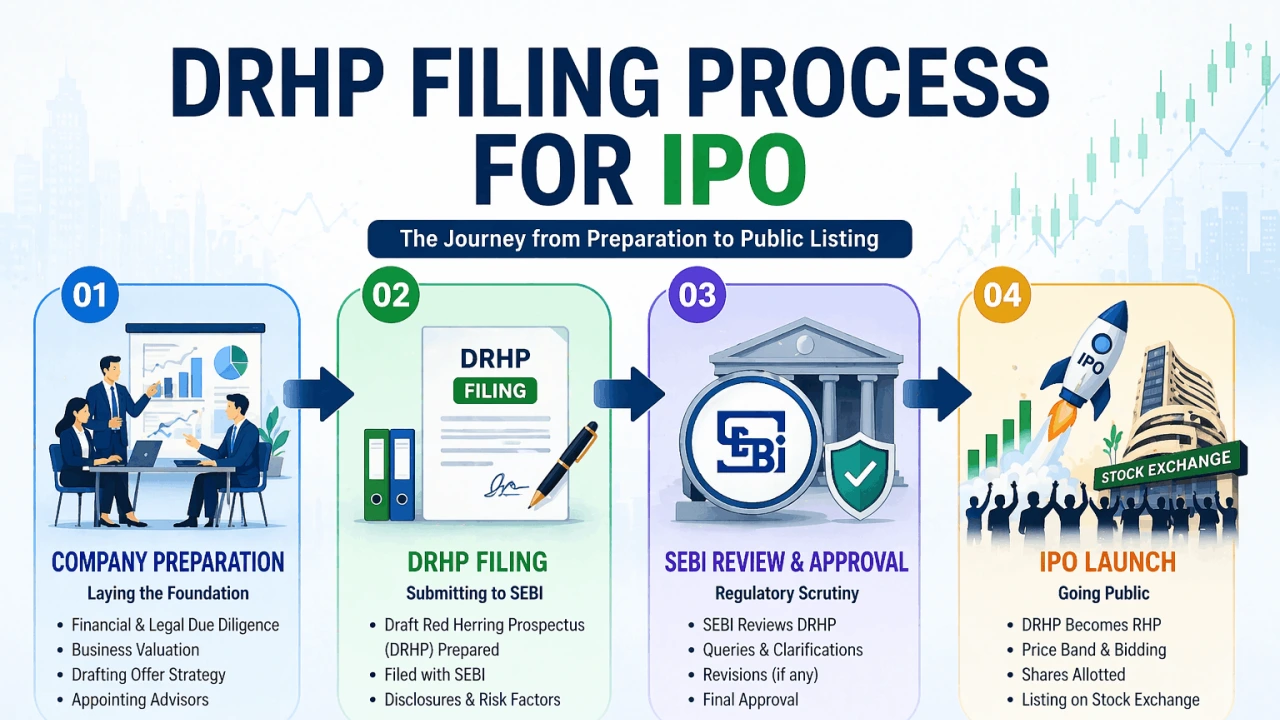
If he does so, then you can rest assured that money is coming to your IP because he has written it, now what does he do? If you are filing then you must have heard about DRP and HP for filing. This is called draft. Red Yearning Prospectors or Red Yearning Prospectors is a document which is submitted in SEBI or everywhere else to tell the public, look what is the IPO we are bringing, so before today I have reviewed all the IPOs like I had reviewed LIC IPO, I had reviewed NICA.
I had reviewed the policy bizar and the support of you people and the help of God has meant that till now I have completed five Have reviewed the IPO and 500 predictions were correct. Where do I get the data for the predictions? I come from this RJP, this is the RJP file and it is also open, see the promoter's name in it.
The details are: Who is the promoter, where and when, what is his education, how many shares are there, the complete details of the company are also there, whether the company cover register was registered, what is the work, how does it work, how many branches are there, how many employees are there, how much is the turnover, what is the profit, what is the risk in it, what is the opportunity in it, write down all the things and give it, it is a balance thing, our plan for the next five years is that we are going to do this with this money by taking the money.
You have to tell everything, tell him that wherever the filing is to be done, all the things have to be filed in SEBI, file in SEBI. It will be junior, like in SME IPO, SEBI is not required, so it will be filed in the stock exchange wherever. There is a requirement that a company act will be filed in the Rosi by going there and a copy of that document will be collected everywhere.
The first step comes, pricing is agreed, how much will my share cost sir, that too, the merchant banker will work. You have to be rest assured, check your old balance sheet in merchant and write down the possibilities of future balance. He follows a mechanism to calculate the valuation of the company. He has calculated the valuation of the company. If the valuation of your company was Rs 50 crores, then it was an IPO of Rs 10 crores. Then how much has this IPO been worth? Rs 10 crores.
What is the market cap of rupees? 50 crores 40 crores. Who has it? Friends, we have yours. There was no value of the share, there was no value, now it will be worth Rs 40 crore while sitting. If you son, the share had no value, there was no value, now son, the value of your share has become Rs 40 crore, so this is your first advantage, now it is an IPO of Rs 20 crore, now they said brother, at how much rupees should I bring it, then they also calculate the rupees, they come up with a fix that okay, a fixed price IPO. It comes to mind that brother, look, you have to launch an IPO of Rs 10 crores and if you are issuing so many shares in total, then you fix it at around Rs 200 or what do you sometimes do without fixing it at Rs 200?
He said, we will bring it between Rs 180 and Rs 210. So people apply that ratio fix between 180 to 210 as per their wish. Then IPO can open at Rs 180 but will not open less than that and will not open higher than that. A rate is reached, now it comes to the question that brother, this 10 crore rupees epic is Who will invest money in it, but we think that people like you and me invest, no sir, there are three types of categories.
There is one called QIB Qualified Institutional Banks, what they do is they call such fixed banks which are big Mutual funds like Reliance Mutual Fund, ICI Mutual Fund, SBI Mutual, BI Mutual Fund, these are big funds, who are saying that okay, do one thing out of 10 crores in this IPO, let us take 5 crores, one is QIB, one is Non-Institutional Investor, like a big person, he will directly invest Rs 1 crore, directly Rs 2 crore, he is not an institution, he is a person, but that big man. Yes, don't do small retail at one go, subscribe and third, this is called retail investor or someone like you or me.
Anyone who wants to spend 25-50 lives can spend ten pieces. If it is divided into these three categories, then government. There is a requirement that why this IAB is yours, it is necessary to take a special part in your IPO. That the government says that IPO worth Rs 10 crore will happen tomorrow. What have you done that you invested all the retail investor's money and yesterday the IPO sank, then the retail investor What to do if someone abuses you, then say to those who are big elephants, you also invest some money.
So that the entire burden is on retail and if tomorrow there is some rise and fall, then half of the low and low you also share the same. Now let's see whether you are also okay, everything has been divided, we said in ten crores. Even if you buy Rs 5 crore, the big funders will give you Rs 1.5 crore, the retail ones will take only Rs 3 crore.
Investors are now being promoted, it will be given TV spots, people will be met and meetings will be held. A party will be organized, people will be educated, see how good our company is, please invest money in it, after that the process of listing will open, brother, it is okay from 10th to The window has opened between 12th, you people can apply, these people apply and deposit the money.
So now there may be two or three conditions in this. The first condition was, did you say agree, I had five lakh shares. There were things worth two hundred rupees and ten crore rupees.
Out of five lakhs, the application came only for three and a half lakhs, so the application of one and a half lakhs, tension means he Your merchant merchant had told you that I am ready to take it, sir, it was for 5 lakhs and 5 lakhs has arrived. End the matter, distribute it to everyone, what happens if the application was worth Rs 5 lakh, 15 lakh people adopted it and Brother, it has been subscribed three times more, then according to the quota, it is given to whomever it is as per the quota.
According to the calculation, the amount given to the person who applied is given accordingly, if someone applied three times then he gets it. Given one, these things increase accordingly like it is said that when my IPO is not opened, his IPO is opened, this happens when things and subscribe It happens that if you are not subscribed then the more you pay, the more you will get. After getting subscribed, everyone will get it.
After the allotment, now this share has reached the market on BS thing, on NAC and in the pocket of your investor. You have shares and money in your pocket, now it is your responsibility to make good use of this money for the company. Take it further so that the share that he bought today for Rs 200 will be worth 400, 600, 800 tomorrow. The share that he bought today for two rupees, tomorrow its value will be 400, 400, 800.
This is what they want, they will not share in your profits. They will not share in your revenue. They will have no say in your decision making. But they just want that this money should also be utilized properly today. So that my 200 becomes 800, Yes, if you have profit in between, you can distribute dividend from it.
And whether to share or not is in your hands, Do you think, friend, last time you had earned 2 crore rupees, let's distribute 1 crore rupees to the shareholders or do you think no or I will not distribute 2 crore rupees for further growth in the business, you can do that too, so I hope you have understood what is the process of bringing IPO. If you have any question related to this, ask in the support mail or technical team will reply in meantime.

Best ways to earn money online step by step
How to earn money online?
When an individual or enterprise wants to make money through internet media. It is also known as digital media. Seller in Amazon, Flipkart, affiliate marketing, services based work as remote jobs such as calling, Blogging business using website, etc. Our generation nowadays we having various options to earn money online, your neighbours or friends also worked if you connect with others or you can search on internet but today we will here make you easier by providing right guidance with facts and our experience. We will make easier so you can go through best way to start and grow yours business to make financially stable to fullfilled all dreams of yours and family.
Two types of earning mode:-
Offline Mode:- the way of earning money using offline channel without internet. As physical shop (General store, Sweets and Bakery Shop), etc.
Online Mode:- the way of earning money using online channel using internet. As flipkart.com, amazon.com, blogging website, affiliate marketing, posting videos on youtube.com, selling products online like cosmetics, footwears, apparels, accessories, electronics, etc
How we can start Online Business to earn and grow?
We are guiding you in steps :-
Conclusion:- Prefer website if minimal budget if extreme then you should go for mobile application.
Conclusion:- if you are new to business then you have to invest step by step first website then mobile app. After select marketing type seo or ads based. If getting sales then expand the teams to handles all of the operation.
Note:- If you want to learn and earn we will provide guidance to earn passive income from yours home. Many platforms are now providing to earn money online.
Trends that Transforms Nation:- Exclusive news coverage 24*7 With Bindass Bol Dil Se. Follow us and get updated in runtime with our networks.