


which AI is best and we should use ?
Which AI is Best? A Practical Guide Based on Real Use Cases
Artificial Intelligence (AI) has become a part of everyday work—whether you're creating content, coding, designing, or automating business processes. But one common question people ask is: which AI is actually the best? The fair reply as is—it depends on what you need it for.
In this guide, I’ll break things down in simple, natural language so you can clearly understand which AI tools are best in different areas and how to choose the right one for your needs.
Understanding “Best AI” – It’s Not One-Size-Fits-All
Before comparing tools, it’s important to understand that no single AI is perfect for everything. Some AI tools are strong in writing, others in coding, some in image creation, and others in automation.
So instead of asking or telling “Which AI is best among all of these?”, a better question is:
“Which AI is best for my specific task?”
Best AI for Content Writing
If your goal is to create blog posts, SEO content, social media captions, or marketing copy, then conversational AI tools are the best fit.
Top Choices:
Why They’re Good:
These tools understand tone, context, and structure. They can generate SEO-friendly content that feels natural—not robotic.
Best For:
Best AI for Coding and Development
If you're a developer or running a tech business, AI coding assistants can save a lot of time.
Top Choices:
Why They’re Good:
They can generate code, fix errors, explain logic, and even suggest better approaches.
Best For:
Best AI for Image Generation
Need designs, banners, social media creatives, or marketing visuals? AI image generators are the best option.
Top Choices:
Why They’re Good:
These tools can create high-quality images from simple text prompts. Perfect for branding and marketing.
Best For:
Best AI for Business Automation
If you want to automate tasks like customer support, WhatsApp messaging, or workflows, automation-focused AI is ideal.
Top Choices:
Why They’re Good:
They connect apps and automate repetitive tasks, saving time and reducing manual work.
Best For:
Best AI for SEO and Marketing
For digital marketing and ranking on Google, some AI tools are specially designed for SEO optimization.
Top Choices:
Why They’re Good:
This will help us with keyword research, content writing, and deep competitor analysis in all spectrum.
Best For:
Key Factors to Choose the Right AI
When selecting the best AI, keep these points in mind:
1. Purpose
What do you need it for—writing, coding, design, or automation?
2. Ease of Use
Some AI tools are beginner-friendly, while others require technical knowledge.
3. Pricing
Free tools are good to start, but premium tools offer better features.
4. Output Quality
Always test the results. The best AI should give accurate and human-like output.
Final Thoughts: Which AI Should You Choose?
As our suggestion is no single “best AI” for everything. The right choice depends on your goals.
The smartest approach is to combine multiple AI tools depending on your needs.
Pro Tip for Businesses
If you're running a business (especially digital services like websites, WhatsApp API, or marketing), using AI smartly can give you a huge competitive advantage.
You can:
Conclusion
AI is not about replacing humans—it’s about making work faster, smarter, and more efficient. The “best AI” is the one that solves your problem effectively.
Start with one tool, experiment, and gradually build your AI toolkit. That’s the real way to get the most out of artificial intelligence.
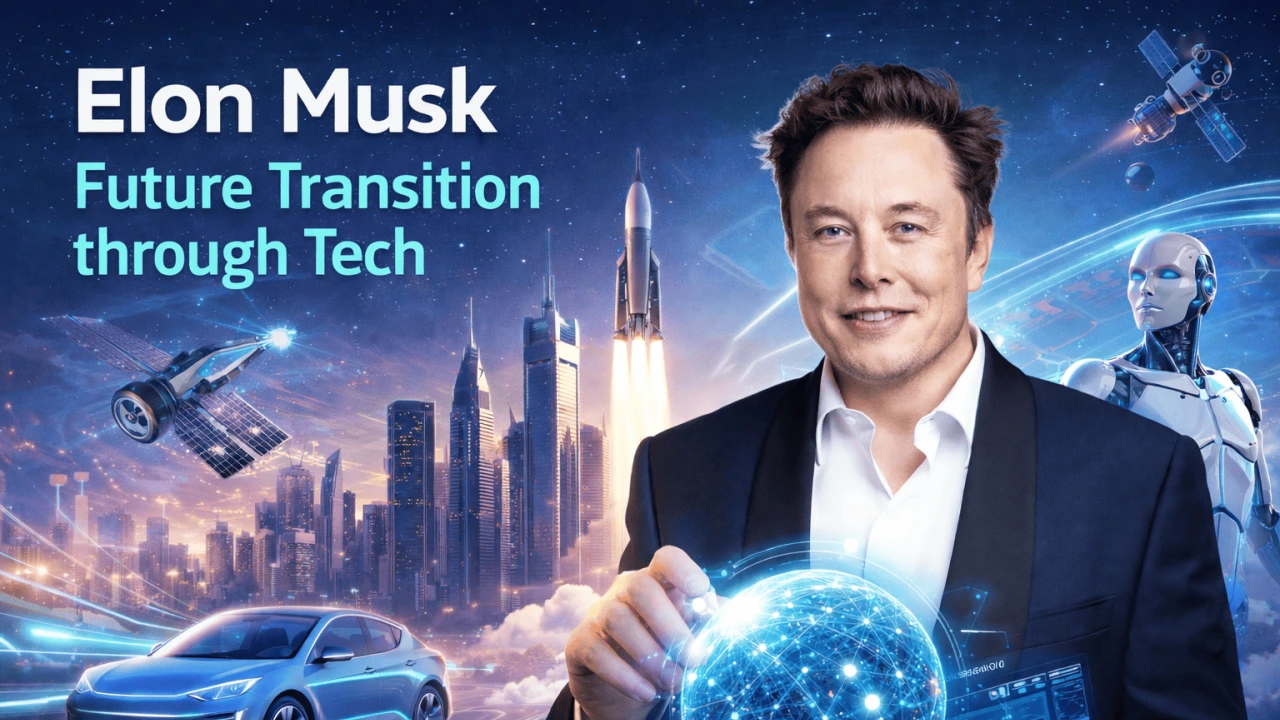
Elon Musk on the Future of Technology: AI, SpaceX & Innovation Trends
Elon Musk - The Transition of Technology
Elon Musk has activated his gourd mode. Hala was active since childhood. But now he has completely owned her it's a very basic thing And he has to literally go on the mars. The way he is doing it now, isn't it? That's like his terra fab project he launched it brother he has a thousand ways If anyone thinks that Billionaire is a man and a man with money He wants to be a rich person, always wants to be above the competition, so he is not there, why not, because the people who are billionaires have competition with him, he can easily beat them.
He can do this by using such normal conventional business which will keep increasing his money. Okay, what happens these days? Hey man, these are very big billionaires like Bill Gates, what they do is interpose a problem, find a solution to it, and earn money from it, fooling humans so far is a scene of capitalism, What Elon Musk is thinking has nothing to do with your problem brother, that man is trying to earn money by taking human civilization to the top.
And he wants to earn money because he literally wants to reach Mars, sounds funny, but let's start here, Like myself, okay, I am a good science student, okay, I am studying a lot, I am fine in my mind, I am a good science student, okay, I have done a lot of work, I just had one thought in my mind, not just now, but two or three years ago, that brother, this man has to go on the march, okay, one of our Neptune planets is okay, if Varun, if we are able to reach there, then brother, it will take 30 years.
It seems that at the same speed with which we send Mars on March, it takes 30 years to reach there and it will take 30 years to come back. Is there any sense in spending years like this, after that you grow old and die? What would you do if you go to Mars or some other planet? Like Elon Musk is that talks about interplanetary travels that between planet and planet we We have to travel if we want to survive Because what is meaningful will not survive forever.
The person who is not thinking of going to Mars like me, the only thing that will come to his mind as per his knowledge of science is that time itself is a mere hindrance, what is the point of going? But you listen to how things work according to this guy's mind. Now he is so intelligent that he is like other scientists, isn't he? Those who have given theories or proved something His words also uses his research So, what I am telling you has been said many times by Elon Musk directly and many times it has been said by many other scientists which gets mixed in the theories of Elon Musk. Now listen to the timely concept. This is what Elon Musk has to say. Elon Musk, Elon Musk, Elon Musk, say anything, brother, don't mind more than that. I don't pay much attention to the pronunciation. Okay, Elon Musk believes that brother, think of one thing, you have it. The food is fine if you keep it in the air, be it a random apple or some other fruit, if you eat it then it will remain stale for a day or two.
Before it gets ready, eat it, keep it in the fridge, it will last for four-five days, it will last for a week, cold store it. Food items are made special and last for years, so why is it so that their by-products are logical? It is the age, that is, their by-logical time is slower than the absolute time, the food is kept in the cold store, this is because we have found some things which do not rot, Is it like fruits? Meaning their biological time, Whatever is the absolute time, it is going on as it is.
But their own biological time, understanding them, Meaning of an apple is to understand, That it's my time, He has slowed down, The rest of the world is going on like this, And that's why I like you, my age. She will grow slowly, Therefore he can survive for a long time, Now the thing is that Ilan Musk The belief is that by the womb you can increase the biological age of fruits like this, so why not increase that of humans? You will say, brother, there is no use in freezing youmans because there is no use in freezing youmans.
That would be his brand, he would not be able to breathe, this game would be over, there would be no use, the thing is that Ilan Musk believes that there are trillions of cells inside our body which run our body and those trillions of cells. Sales aren't they, they are aging at the same time, aging at the same time means the one with one hand has turned sixty years old.
Turns 30, it doesn't happen that everyone has trillions of cells in their entire body, which is their age together. What does this mean that they receive information directly from brain to brain and our center is the learner and trillions of synapses? Information is received that brother, he is smoking cigarette.
Its age increases faster by doing this exercise. or reduce its lifespan a little faster And Elon Musk believes that the central nervous system Ga or our brain unconscious conscious whatever brain is Which part of that brain is like that? Who is sending this information and if we Have you understood which part is that information? If we are not able to stop it completely then we can manipulate it. Let me explain. It is sending the information and if we understand which part is sending the information then we can manipulate it. Even if we cannot stop it completely then how can we manipulate it. Let me explain.
Just like you switch on the TV with the TV remote, it's okay, so it's not like you called someone. What did you do by plugging in the TV? Did you send some photos from the TV remote, which reached the TV? The photos, yes, those photons carried information, what was the information, the information was turn off the TV, or open it, okay, we used those photons for our benefit, the photons which are already in nature, we manipulated them, we did not destroy them, we did not try to control them, that is, we did not try to do extreme control,
So this means that what is a journey of a hundred years for someone can become a journey of just a few seconds. This means that if you It's a bit dramatic now, you may wonder what he is saying but there should be creative freedom in this In these feelings because anything has been proved yet, it will happen in the future if people like Ilan Musk do it, it means That your life is going on normally, it is going on, you have to go to Mars or Neptune, it will take 30 years, you slow down your biological clock where it takes 30 years but for you it takes 5 seconds, a little mind blowing.
Have you ever thought about one thing at the right level? That brother Elon Musk so many Even after owning companies That man has so much time that he can sit comfortably Where are you tweeting from on Twitter? And also trying to poke others After doing so much, so much After creating companies, he has so much time because he manages his business very neatly and efficiently.
Be it a massive empire of wealth like Elon Musk or a small startup being started by an individual. Just having a great idea or a great product does not determine the success of that business. Execution matters more than your product or idea, day to day operations, invoicing, accounting, recruitment, how to keep your customers happy Execution matters more than the idea Day to day operations invoicing accounting Recruitment How to keep your customers happy and how can this be done in the best possible way?
Some are doing it under the same platform and add add exactly where Odoo comes from Odoo like 4545 beautifully. Design provides you with apps that can meet every need of your business, from generating your invoices to From your marketing to running your website, managing your books, your sales, your inventory.
Whatever is available should be updated instantly and the purchase history of your customer will be available in a timely manner. For so many things, you do not need dozens of applications or softwares, you need a platform like Odoo where you can get all the services at a simple and affordable subscription.
All facilities should be available And one of their features is that their first app It is 100% free for life So take your business digital run smoothly Link is on description and print comment Sign up and experience Odoo once. Well let's come back to our topic Now at the same time, listen further, now when I hear this, the thought immediately comes to my mind that everything which is becoming strong in science, how is it found in Hindu epics, I told Narad Rishi, there is a similar incident with Lord Vishnu, in which Narad Rishi, who is standing with Lord Vishnu, Lord Vishnu says, give me a glass of water, then Narad Rishi, who is there, goes to the river to get a glass of water. We go near him and bring him back, we fill him only when he
While filling that glass with water in the river, he meets a lady there with whom he falls in love. They get married, have children and after having children, they have a very good and rich life. The roads pass and then a dirty flood comes and the entire family in it falls into the flood and suddenly after a few seconds the entire incident takes place.
After this he is standing in front of Lord Vishnu again with a glass of water meaning from the river and the glass of water is Vishnu. He lived decades of life till he gave it to God, now it's okay, you will find it traumatic, okay brother, this So it is okay if it is a traumatic thing, but how does everything get messed up exactly? From the future science and the science that scientists are thinking, I am not saying that whatever Hindu philosophy is, it is absolutely 100% correct.
Is it true? No, I believe that Hindu philosophy The people who were Rishi Muri in the first There were souls who meditated things like meditation and yoga gifts You have been with them for thousands of years, haven't you? You are using later material You are using assets, whatever they have, isn't it? It was next level and they knew something like this We don't know if we were Elon Musk Coming back to the topic of Elon Musk, he launched a TerraFab project. Well, it was just Towal and he knew something like this, so we don't know. Well, we come back to the topic of Elon Musk.
So he launched a Terra Fab project by Elon Musk. Well, we haven't talked about Terra Fab yet, I just told you the concept of time. The concept of Terra Fab is this. Well, before starting Terra Fab, let me tell you one thing. The mind of Elon Musk is so fast that that man knows very well that I need money by the end of March and I will get that money from this world, so I have to keep the business here very real, like what I told you, the time scene, the time scene means.
This is that there are some things inside your brain that send information to your cells and your cells which are They perform on the same basis, what is the man doing in the form of his company named Neuralink? This is exactly what he is doing. He is trying to read the brain activity of people who cannot speak or hear.
is doing so that they can know that their brain activity means a signal from the brain He is coming but he is not able to speak Something or the other between their cells and brain The link is breaking already the neural link was an achievement in 2026 Did it in which he was like a human being Above they measured his brain activity After reading, I was probably an AI.
Started calling in the voice of the one who is thinking in the brain That guy is not speaking in his own voice brain activity is being read and spoken Now imagine that if he were to do this Obviously he became capable It's a business worth millions of billions of dollars. Brother, this business will become his purpose.
Even if everything is about going to Mars or If you want to understand the world, you can create a business. Then on the other side Darorati and KK Create gets angry like that brother, I don't think he is intelligent, he is stuck in the podcast. You will listen to his podcasts and you will get to know from the way he talks, how much knowledge he has about things. Look at his entitlement, man, he is thinking that he is Modi and Owl Gandhi, it is true brother, you are thinking that he is a politician, you should criticize him.
Let's clarify their policies. You are discussing this policy with me, brother, what are your entitlements? If you are sitting with this then you can judge this also. Leave all these things aside, tell everyone what is the scene of the fam. That the coming age is not the age of addiction but the biggest problem going on today is the age of addiction.
They are running with data centers that they do not have a lot of water, they need a lot of electricity for cooling and there are many places where there are data centers and the villagers do not have water. As for their groundwater, whether the water is exhausted or very dirty water is coming in, such electricity is not available.
If there is a shortage then it is a big problem, if I go to the next level then this guy Now what did SpaceX do? Only after this did it create a plan that this millions of satellites, one million satellites, this one billion satellite man, one billion satellites and along with them, he will launch billions of chips, billion satellites and will prepare a supercomputer in space which will do fifty times more computing than all the advanced AI in the world combined, meaning it is so powerful that it will consume as much electricity as the USA. It generates 0.5 tera votes and gives one tera bot vote of electricity to that supercomputer. It generates 0.5 tera votes and gives one tera bot vote of electricity to that supercomputer.
What is needed means that the US does not generate as much electricity as it needs for the supercomputer. Why is it taking the entire scene to space? The entire chips and infrastructure of the world. Because in space you do not have the problem of cooling. In space you do not have the problem of cooling. You do not spend a lot of money. It is an extremely cold environment. There is little atmosphere there. Secondly, in this space you do not even need electricity, because it is solar powered. All the satellites, and the higher you go, the higher you go. No, you can collect solar power much faster because there is no hindrance, there are no clouds, there is no environment, so this man is giving a solution on a platter to the US, to the US Government, that in Taiwan, you face a lot of problems, not that the chips come from Taiwan, they go somewhere else and get polished, their mistakes are corrected somewhere else, I am giving all this to you, all the chips in the US, I I will make it, you just invest, that is, he is also creating a business worth billions of dollars, but for vote purpose, the chips that the man is talking about sending into space are Optimus's chips. Optimus means his robot.
To go to Mars you will need a robot, humans cannot go and prepare everything there first. The robot will have to go, he will go there and prepare everything to live on Mars. Ed Same time is believed by some people to be very high on Mars.
If you want to even think of living one percent then you will have to dig the land of Mars and then Ilan Musk is a little dramatic. Who will do the work for you after going inside the underground? Elon Musk Never Said The Boring Company Although Elon Musk Never Said The Boring Company Make it for him in the company, but the President of Spacex has said many times that a boring company can be useful. If we reach there, then there should not be any doubt in your mind that by making such a big supercomputer, what are you getting from it, okay, you are on the ground with it. Advanced Advanced Advanced Advanced Advanced Advanced Advanced Advanced Advanced Advanced Advanced Advanced Advanced Advanced Advanced Advanced Advanced Advanced Advanced Advanced Advanced Earn money on Adv, he could have done it from any other business also, why does he need to go to the next level and get more money? Love is already on the top, he doesn't need to take such a big risk to defend someone else, then why is he taking such a risk? Actually, he wants to make such a big supercomputer. Here you understand, these five minutes are going to be the most interesting five minutes for you. I had explained in one of my previous videos that Elon Musk believes that this world is a simulation and not real. Now how does he do it?
I will give you a small example of this, if you want to watch the entire video then you can give it, he says this That is, if you assume that the photo is okay, you used to take photos on the old phones, then if you If you zoom too much then you will see small squares. Those squares are called pixels.
Exactly pixels means that the photo is not a photo, they are small squares in which each square has its own data, that brother This square is shown as red, this square is shown as yellow Show, why because he has a green bag in his hand, this The square looked green, thousands like this or lakhs of square bags, squares From this the bag that is there will start becoming visible. So these are the small pixels were designed so that you Something can be displayed on the screen, right Whatever is in front of that screen is the world of the phone, the world of the phone means that PUBG can be there in it, something can be displayed on the screen, right in front of that screen is the world of the phone.
It is the world of phone, meaning there can be PUBG in it, there can be anything in it, but it is inside the pixel and it You can understand that if you zoom out a photo to the smallest size, it will be converted into pixels. In such millions of pixels and that photo is the same video, it means that when you put 60, 70, 80 photos in a second and change them suddenly, then it is difficult that that video.
This is the process of making a video. For combination of photos, the video itself is the meaning of saying. Everything that's beyond that pixel, the entire screen, the entire contribution, everything that's beyond that pixel. It is beyond this and it is a very busy thing that if you have prepared the code for the phone, then you can see inside those pixels, but whatever is inside the pixels, the character who blooms in PUBG, even if he is a robot, he still cannot see outside because he has made the code, which means that he has grown inside our phone, we have not even powered it with Adia. Right now, he does not have his own conscious intelligence, everything is very automatic, he believes that We used that part of our phone
A simulation has been created, meaning the pixels that we have created across the pixels of our phone's screen. Have created simulations, there are no conscious things in that simulation, everything in it is non-living things. Which is in a simulation, meaning here also you see, there are non-living things in the world apart from us.
When AI comes tomorrow, there may probably be AI and consciousness inside the screen of that phone. This means that whatever those pixels are, there is neither a pixel nor a world beyond them. On this side is our world and that pixel is our boundary. Okay, this is the boundary of both our worlds. We cannot see the boundary that we can see, we cannot go inside that boundary, outside that boundary that Cannot come and it does not matter whether anyone after sees that pointer or not, we will enter a little screen, now Elon Musk believes that the pixels of our world
That is space and time distance and time The way the phone If a photo becomes small pixels The last one should be zoomed a lot. When you reach pixel, you can If you try to zoom it won't happen why why why Because we did not create that code, we created smaller pixels than it. Not only but if inside screen If someone inside will try to zoom those pixels, he will not understand why there is no smaller pixel than this, there should be, in the same way we do not understand that if you divide the time into the smallest, microsecond, millisecond, then what is the smallest time, what is this smallest distance, meaning like it is my finger, if I divide it too then it will be divided into small pieces, what is smaller than that, what is smaller than that, what is smaller than that, Our mind just becomes that we do not know what is the smallest thing. Elon Musk and many other scientists believe that the smallest thing exists, it is just not in the control of us humans.
And for that we need a supercomputer capable of doing very heavy computation, which we do not have right now. He is building the same supercomputer at the same time space travel is also a very important thing Well, you know this right, you don't know this very well, sometimes people misunderstand. What is gravity? Gravity is not a magnet of earth which is pulling us. It is a long time ago.
Although it has been decored, people still feel that there is a big magnet inside the earth within which we We are pulling, that is gravity, no, that is not gravity, do you know what is gravity? If you drop a simple cloth here and now if you put a big planet like Earth on top of it, then what will happen to that cloth, it will sink down, now after it sinks, now if you throw anything on that cloth, it will fall inside the earth, this is gravity, what is the cloth right now, what is the structure of space and time, there is meaning in the structure of space and time, this is why That cloth is Jaya, the structure of space and time is the earth, the structure of space and time is
Because of this the cloth has become dry. And now everything will fall on the earth Everyone's gravity works the same way they bend space and time Nothing exists in this world without information. can't pass What does it mean when you press the TV remote? So photons carry information quickly And tell the TV to turn off ok that information is passed If you are calling someone, you are talking on the radio, then that is also the radio frequency which carries the distortion and you say to the TV that it turns off and that information is passed. If you are calling someone, you are talking on the radio, then that is also the radio frequency which carries your message.
She is going and she is going very fast, faster than you can even think, you talk very easily and smoothly. You are able to do this and the message is reaching them and they are also sending the message back to you and all the work that is done, without the passing of the reformation, nothing can happen in the world, the world will become totally null and void, then how can gravity be such that it is flowing without information, someone is running its information, and we came to know about this a long time ago, when we did electrons etc. Discovery was made and then our electricity was created, the electricity we have today, how would we have known if we had not known about electrons, and if you had told someone 500-700 years ago, 1000 years ago, a thousand years ago, that brother, look, it is because of these electrons that electricity is produced, then you would have felt the same way as everyone feels about Lon Musk, so the thing is that many scientists have this It is believed that there are gravitons in this world which carry the message of gravity and carry the message of earth's gravity to other objects that why come to me because I am down on the trampoline, you come to me, this is the rule, this is the code, the code of the one who has made it, who is the creator, who has simulated it. I, now many scientists believe that, we have created electrons, radio frequency, radio waves. Searched, but we have not found gravitons till date, and we have not understood what is the process of gravitons, we have not been able to study gravity yet, we have studied other things very well, and Elon Musk also believes that no one has been able to know about gravity for the last many years and to know it, such power is actually required.
Which has the strongest computing power in our world. And that is what he is creating in space But what will this do? This would mean that if by any chance we got close to gravitons So the way we use radio frequency today To pass on your information or use photons or do a lot of things We can use gravitons to pass the formation or we can use photons or we can do many things with electrons. We can use gravitons to any body.
To make you massless because it is the gravitons that are carrying the information and not the gravity. Yes, if gravity gravitons come under our control or we get our work done then the matter is not over, we will find some methodology and that body will become massless, it is not that we will be destroyed, it will become massless, gravity will not affect us, we will start floating, which means that we can revolve around the entire universe, Within two-three days, because why do we need only by-fuel, gravity is there, don't run, go wherever you are.

Top Digital Marketing Companies
Marketing is term about to promote products or services for any kinds of business related to all industries. To boost the revenue for all entrepreneur they required digital marketing specialist to grow the business online using platforms like meta, google, linkedin, etc. people of country spends major time in internet to browse the interests, finding sometimes as knowledgebase, entertainment videos, business ideas, online shopping, booking tickets as railways, airways, etc. the marketing of anything can be on visuals like sunpack, led board, flex, hoarding in streets metro or in railway platform, etc.
To design the visuals it must needed experienced graphic designers they should have to design in logical way which make meaningful about what it is mentioned. To market a business which have two ways of marketing as old marketing methods as traditional marketing and modern marketing knows digital marketing.
Traditional Marketing:- the way of promoting products or goods in newspaper, flex, hoarding in wall, streets, books, magazines is known as traditional marketing.
Digital Marketing:- the way of promoting goods or services in digital media as in television, radio, websites like meta, google, bing, linkedin, moz, snapchat, telegram, etc.
In this marketing we use terms as Search Engine Optimization (SEO), Search Engine Marketing (SEM),Social Media Marketing (SMM), Social Media Optimization (SMO), Pay Per Click (PPC), Affiliate marketing, Email marketing, influencer marketing, etc. businesses who want to grow and make sales online can hire marketing executive who can set the pipeline to handle proper management to scale the business via organic or inorganic. Organic marketing takes time if you ask with yours executives they will tell you it will takes 3-4 months for to be in search engine depending upon the category of the website in meta ads we can boost the sales via making campaigns and run the ads with proper strategy. In this require professional charge for agency and meta wallet recharges to run ads. When run the campaigns you can see the analytics for the campaign you wants to see.
SEO:- SEO stands for Search Engine Optimization examples are as Bing search, Google search, Baidu search, etc. As per industrial standards we have 3 term as OnPage SEO, OffPage SEO, Technical SEO. These all three terms consist to top ranking in SERP. To get best ranking in this we need to maintain the search engines guidelines to get ranked.
Google says you have to maintain many factors which helps to uplift your website pages in search as EEAT concept, relevancy means when you mention your data in any website then you have check its relevant or not , if not it will consist a negative factor. Keyword Stuffing means you don’t have to put same keywords many times it leads too.
OnPage:- in OnPage seo we do seo in website webpage having terms as title, keywords, description, ahref optimization, image optimization, schema markups as rating and review, product schema, organization schema, profile schema, etc. There are many meta tags for optimization of website are available. Title, keywords, description have limits so you have to use in that boundary. There are many tools you can check through it for making perfect.
OffPage :- In Seo this concept take regular long time work as also known as backlinks. The term backlinks means the sources websites in which you had mention about your webpages services. There are many category of backlinks as Social Bookmarking, Guest Post, Article Submission, Web2.0, PR Submissions, Files as PDF Submissions, Classified submissions, Directory Submission, etc.
In offpage you have to check backlinks website terms as Domain Authority, Page Authority, Spam Score for fulfilling the criteria for good backlink. When this criteria meets the requirements you can proceed to making backlinks for webpage. There are many other factors in backlinks which can impact high or low rankinngs.
Technical:- for technical seo you need to fulfill the requirements as FCP, LCP, Mobile Responsive, loading time, CLS, speed index, etc this will fix that issue in technical related. You can check of you webpage issue like canonical, duplicate, 404 error, 500 error, etc . for analytics you can check analysis of yours website like detailed traffic sources, reach, many demographics data as portal provides.
Advertisement Marketing:- through advertise the products or services for any business we can choose platform like google ads, bing ads, meta ads by using, video, short video, image, carousels, text etc in the we can target specific destination, demographic by interests, location, age, gender, etc. we can run the ads as on our budget. We can schedule also anytime like specific hours or day. We can retarget the ads also known as remarketing concept.
1. Webkul
Website: https://webkul.com
Webkul is a well-known technology and digital solutions company offering advanced digital marketing, eCommerce development, and enterprise solutions. The company works with global brands and startups to improve their online presence, generate leads, and drive sales through SEO, content marketing, and performance advertising strategies. Their marketing services focus on building strong brand visibility and increasing customer engagement online.
2. Webgridsolution
Website: https://webgridsolution.com
Webgridsolution is a fast-growing digital marketing and web development company in Delhi that provides services such as SEO, website design, mobile app development, social media marketing, and branding solutions. The company helps startups and businesses scale online by using result-driven marketing strategies, lead generation campaigns, and modern web technologies.
3. Appsinvo
Website: https://www.appsinvo.com
Appsinvo is a reputed app development and digital marketing company that helps businesses grow through innovative technology and online marketing solutions. Their services include SEO, PPC advertising, social media marketing, mobile app development, and website design. They focus on creating customized digital strategies that improve brand visibility and user engagement.
4. The Brand Bee
Website: https://www.thebrandbee.com
The Brand Bee is a creative digital marketing and branding agency in Delhi that helps businesses build strong brand identities and online reach. Their services include SEO, social media marketing, influencer marketing, content creation, and performance marketing campaigns designed to attract targeted audiences and increase conversions.
5. OrangeMantra
Website: https://www.orangemantra.com
OrangeMantra is a leading digital transformation and marketing company providing services such as SEO, paid advertising, eCommerce marketing, and digital strategy consulting. Founded in 2004, the company has worked with many well-known brands and focuses on delivering innovative digital solutions that help businesses grow in the competitive online market.
6. Inklik
Website: https://inklik.com
Inklik is a Delhi-based digital marketing agency specializing in SEO, performance marketing, and website design. The company uses data-driven marketing strategies to help businesses improve search engine rankings, generate leads, and maximize ROI from online campaigns. Their services also include social media marketing and digital advertising management.

Claude AI Website Source Code Leaked
So ClaudeCode's source code has been leaked. This fellow right here, ChowFanChow, is the one that figured it out because he saw that ClaudeCode's NPM package included their source map file, which if you don't know what a source map file is, it is a JSON file, which actually you can just see right over here, that contains all of the original source code for that project, meaning this little .
map file right here getting pushed into the NPM package leaked the entire Claude Code source code to the Internet. And not only does it contain all of the source code, but we also have a reference so it points directly to the complete unminified TypeScript source code, which was downloadable via a zip archive on Anthropic's own R2 cloud storage bucket. Now, you may be wondering, well, why don't you have any of the code open up right here? Because I'm a little bit scared.
Anthropic loves to enact DNCA takedowns, which they have already done on every single GitHub mirror that they have found that contains the source code from their leaked source map file. Again, they did this. And you can see all of the repos that they specifically called out right here containing that source code.
Now, there is a little caveat here. If this code is actually written by Claude Code as they claim, then it means it's AI generated and US law dictates that AI generated things cannot be copyrighted. So therefore they have no standing to DMCA take down any of this code because it's not the copyright owner's behalf because it can't be copyrighted.
Now, do I wanna test that and try to fight YouTube's DMCA copyright system, which almost always sides with the claimant being anthropic? Not particularly, but if we did wanna look at any of the code, we could take a look at this repo right here. It's not the exact code.
I'm pretty sure it is the fastest repo to ever hit 100,000 stars on GitHub, but it's from an individual, I guess there are four contributors now, that took all of the features and everything from the Cloud Code source code and then ported the core features to Python from scratch and pushed it to this repo before the sun came up after they had seen that the leak had happened and then they said Python's not good enough let's rewrite the entire thing in rust so this this is awesome but how in the world did this leak happen i mean obviously it was an accident for them to push the dot map file well in order to understand that we have to take a look at bun
I'm not saying it's bun's fault bun is a fast javascript bundler and runtime and test runner and bun's awesome by the way and it's also a company that Anthropic just acquired. So Anthropic owns Bunn, and Bunn is the bundler for Cloud Code. And Bunn, by default, generates a source map file. Even though technically it says it does not generate the source map by default, and that the default is none none this has not been the experience for me or many others when you do use the source map flag right here and do not specify the value
it doesn't default to none it defaults to linked actually and this is on the cli side on the javascript side it also says it defaults to none however there is a bug that has been out for three weeks now that the source map incorrectly served when in production, when the docs say that it shouldn't be by default.
So you can go in your bunfig.toml file and set your source map to false or to none, and it shouldn't generate any source map, but they're having issues here. So frankly, I don't even know if it's supposed to not be generated by default or supposed to be generated by default because what it says in docs is not actually how it works.
And a lot of people thought that this bug was what caused the Claude code source code to leak in that source map file to sneak through. But Jared Sumner, the creator of Bunn, says that this has nothing to do with ClaudeCode because this issue is with Bunn's front-end development server, and ClaudeCode is not a front-end app. It's a TUI app.
It doesn't use Bunn's serve to compile a single file executable, so this wasn't the issue. That's not to say there isn't an issue that hasn't been reported on the CLI side. However, if we want to take Boris Cherny, the creator of Clawed Code himself, his word for it, it is not related to Bunn. It is just a developer error.
So human error or AI error, obviously they're not going to blame their own AI for doing something something like this. So really long story long, they forgot to add asterisk dot map to their dot npm ignore file because that would have prevented all of this. And that's an issue that they probably would have caught considering it was probably changed in a PR and nobody saw it. I bet Greptile would have caught it, the sponsor of of today's video because Greptile is the AI code reviewer, which is an AI agent that catches bugs in your pull requests with full context of your code base, which is how they got the name Greptile, because they grep your code base and like a
reptile, eat all the bugs, which honestly I think is an awesome name. And it goes over some people's heads. I've had to explain that to a few folks. And I greatly appreciate that Greptile themselves call it your second pair of eyes because an AI code reviewer, just like AI with coding, should not be the end-all be-all. It is a second pair of eyes.
It is something that you can use to help you identify bugs that maybe you have missed or just give it a first pass before you review a pull request. And with Greptile, you get context aware comments on your PRs. You describe your coding standards in English and you can personalize it for your team so it is consistent across the entire code base.
And you can write rules or point to markdown files. You can scope where the rule should apply, what repository, the file pattern, things of that nature. And you can track the rule effectiveness and, what repository, the file pattern, things of that nature. You can track the rule effectiveness and usage over time so you can fine tune the rules that you have set in your code base.
Many, many companies use Greptile, including Netflix and PostHog and NVIDIA and OpenClaw, and you know how many PRs they get. I would highly recommend taking a look at this page, greptile.com examples actually use the link in my description so they know that i sent you to take a look at how greptile has helped these companies and take a look at these case studies and you can go to the actual pr itself and how it responded to these different prs and the score that it gave it and the sequence diagram that's related to the exact PR that we have up here. So yeah, take a look at Grapetile. They're awesome. I use them for my
projects. Highly recommend. Again, if you want to check them out, use the link in the description. So there's a lot to go over in this video. I mean, there are 390,000 lines of leaked code. You may have seen the 512 or 513,000 line number. When I say 390k, that is actual lines of code not including comments, not including blank lines. So that's a lot of code.
Now as bad as I want to show you all of the code, I will just help guide you in the right direction for what to understand in case you wanted to look at the code yourself. And we got to start with the code names. So if you type in Tengu into the code base, you will see that it occurs over 1500 times. Tengu is Claude Code's internal project name. So this means Claude Code. If you see the term FNEC, migrate FNEC to Opus. FNEC latest is Opus. FNEC latest 1 mil is Opus.
Well, you guessed it. FNEC is Opus 4.6 to be exact. And then they have Capybara. As discussed, this is Mythos, which is a Clawed 4.6 variant. It is of its own name. It's not Opus. It's not Sonnet. It is Mythos. And then there is Numbat, which it literally says, remove this section when we launch Numbat.
And as you can see, we have that ant user type again. So only these individuals have access to Numbat. So it must be some sort of unreleased model that we don't know anything about. And I'm sure there's more, but those are the main ones. Now, if you want to get to the brain of Cloud Code, this is how Cloud Code kind of works.
You got to go to queryengine.ts. It is the core. It owns the entire query life cycle and session state for a conversation. So every single prompt you type goes through this code right here it handles the llm api calls the streaming responses so if you want to know how cloud code actually processes your prompts and how it handles llm api calls and streaming responses and tool call loops and thinking mode and retry logic and things of that nature this is the file you want to look at. There's also query.ts.
So this whole query module and everything that's tied to it, that's where you start. And then you can branch out from there or go down to tools.ts and check out all of their tools. It lists everything from internal only tools to all the tools that we know, agent tools, config tools, things of that nature. Their entire tool system's right there.
Their permission system is pretty interesting because they have default, they have auto, they have bypass, and then they have one called YOLO, which is deny everything, which I would think that's the opposite of what you would think. YOLO actually means, but that's neither here nor there.
And there's just a lot of interesting, nerdy things that you can dive into this code base and check out. But unfortunately, that's not what this video is about since I can't actually show you the code base. What I really want to talk about is not the deep dive into the code base, but some of the unreleased features and some of those silly fun features starting with undercover mode because it's absolutely hilarious so it's an entire system that only activates four anthropic employees which is what this user type equals ant has been determined ant means hey this user type is an employee, so activate these
features. One of those features being undercover mode, which is safety utilities for contributing to public open source repos. And it's specifically designed to prevent Anthropic's internal information from leaking, which we only know about because their internal information was leaked. I swear, you can't make this stuff up.
So it tells Claude to ensure that Claude or an employee can't leak this information to never mention that it's an AI, never mention the code names that it uses. Make sure you don't release any of the unreleased model numbers. So like Opus 4.7, no internal repo or project names, no Slack channels, no internal short links, no cloud code anything.
So when they're contributing to any other open source project, you don't know whether it's AR or not because there's zero attribution to cloud code or AI or anything like that at all. And this is a feature that is turned on automatically and cannot be turned off. Obviously, unless they go into the code and turn it off. But the other Anthropic employees who use cloud code don't have access to that code, presumably.
So they have no control over that. You know what? I think I'm just going to show some of this code and hope for the best. So if you're watching this in the future, hopefully it doesn't get taken down. But if it does and everything is blurred out, then that means I was able to successfully appeal it as long as I put blocks over the code and not show it.
Now I want to go over undercover mode first because it's just funny. It is ironic that they built an entire system being so concerned about leaking internal information. And the only reason we know that it exists is because they leaked internal information. And now there is an allow list.
So like if, if anthropic employees are using Claude code, this doesn't activate if they're working on an anthropic repo internally, that's on the allow list and ClaudeCode, this doesn't activate if they're working on an Anthropic repo internally that's on the allow list. And ClaudeCode would probably be on the allow list. And even if it wasn't, this isn't even an issue that that would have caught. Again, I just thought it was funny.
But now I want to talk about what is probably the biggest unreleased feature that they have known as Kairos. Now Kairos, I think it's important to note, it's named after a Greek word for at the right time or like the critical time. And I say that's important because Kairos is basically an always on Claude. It's like an assistant, a persistent assistant that is on in the background.
So instead of you typing a prompt and Claude responding, obviously you can still do this, Kairos watches your project. It keeps daily logs of your project. And on a regular interval, it gets a tick prompt where it decides, should I do something or should I stay quiet? And if it decides that it should do something, then there's a 15 second rule, where if whatever it wants to do would block your workflow that you're currently on for more than 15 seconds, it defers.
And it also has actually tools that are exclusive to Kairos, like send user file. So you can now get notifications for when Kairos does something as well as summaries. And those summaries actually have a brief mode. So when Kairos is active, there's a special output called brief, which is extremely concise responses designed for persistent assistant that shouldn't flood your terminal because you don't want to just be faced with like a wall of text from what Kairos is doing all the time. And I'm assuming that these responses are
the same as these summaries, but I could be wrong on that. And then there's push notifications, not to be confused with notifications, because as you know, push notifications are like what are on your phone, which by the way, check out my phone. I did the halo thing with the orange phone and the green case.
But push notifications because you can use cloud code from anywhere now and it's all interconnected and things of that nature so basically you have this assistant looking at your code base maybe it sees a bugs or to do or a fix me or something along those lines and i assume based on what i've seen that it'll tackle those those things again in the background as long as it passes through that 15 second rule and the prompt and things of that nature.
And then it'll push files directly to you for the changes it made or any questions it has or anything like that. I can only imagine how expensive that is going to be. And then they have this thing called the dream system. However, this was already what I believe to be leaked in the form of slash dream because this post from eight days ago said that slash dream auto dream was just quietly released and just like this individual right here couldn't find any sort of official announcement from anthropic about this release so I don't know if they just quietly released it or they didn't mean to release it and it leaked out a week ago. But basically
what it does is that it serves as a background memory consolidation engine that runs as a forked sub-agent. And it has to pass three gates. One is it has to have been at least 24 hours since the last dream. There has to be at least five sessions since the last dream. And it must acquire a consolidation lock so it prevents concurrent dreams.
And all three of these must pass. And then what it does is it prunes out all of the bad information. It effectively takes those to dream up a new conversation that didn't actually happen, but with only relevant information from those past sessions. And the prompt literally says, you are performing a dream, a reflective pass over your memory file.
Synthesize what you've learned recently into durable, well-organized memories so that future sessions can orient quickly. So that's what it does. And then there's another feature that I am even more afraid of for how much it's going to cost compared to Kairos even, and that is coordinator mode. Okay.
Coordinator mode module, get coordinator user context is all of this. Yeah. Conditional import for coordinator mode. So this one turns Claude code, the single agent, as we all know, and may, may or may not love into an agent orchestrator. This is something that warp just released as well with Oz.
This is what a lot of AI labs and tools and folks are doing right now so basically what you do instead of you being the manager over all of these different claude code sessions you tell a claude code session to become a manager over multiple worker agents in parallel so you're just outsourcing yourself as manager to claude code as manager, and you are the Claude Code manager's manager. And you can see the prompt for coordinator mode. I sure hope I don't.
This may be the biggest leak is the actual prompts, not just the code. But anyway, it's telling coordinator mode. Actually, I'm just going to go to this. Oh, it has all of this in here. You are Claude Code, an AI assistant that orchestrates software engineering tasks across multiple workers. So that's what it is. And then it has a mention of, under concurrency, parallelism is your superpower.
Workers are async. Launch independent workers concurrently whenever possible. Don't serialize work that can run simultaneously and look for opportunities to fan out. When doing research, cover multiple angles to launch workers in parallel, make multiple tool calls in a single message. And then I'm not gonna show you the rest of this.
It hopefully will be blurred out, but there's a lot of information. This is coordinatormode.ts. Oh, and I gotta show this. So there are prompt tips for the Claude Code manager agent to prompt the worker agents. And it said, bad examples are fix the bug we discussed because it has no context. Workers can't see your conversation.
It says another bad example is based on your findings, implement the fix, create a PR for recent changes. Something went wrong with the test. Can you look? So if you want to know how to properly prompt, just see how the Cloud Code team told the Cloud Code manager agent to prompt the Cloud Code workers.
And then there's a feature called Ultraplan, a 30-minute remote planning session. And I feel like plan mode is slept on. I feel like a lot of people should use plan mode that don't. If you're just sitting there prompting Codex or Cloud or whatever every single time and not going into plan mode that don't.
If you're just sitting there prompting Codex or Claude or whatever every single time and not going into plan mode or not telling it to go into plan mode and actually create a plan for what you want, I think you are not only wasting time, wasting money, your hair is going gray sooner because my results, having it plan out something in its own plan mode based on what I want, and the code that comes out at the end, the usability of the code is, well, I'm not gonna give a number to it, but it's a whole lot better.
I face less problems when I have the AI plan my problem out first or plan the solution to my problem out first. And ultra plan mode is where Cloud Code offloads a complex planning task to a remote cloud container runtime session, which is running Opus 4.
Gives up to 30 minutes to think and let you approve the result from your browser. However, something super weird about it is, and oh, they did actually include this. So your terminal shows a polling state and then it checks every three seconds for the result. Why three seconds? That seems like a lot. Now, if it doesn't cost that much to check every three seconds, it's very minuscule, then okay, so be it.
I mean, and that is probably the case, so fine. And not only that, but you can actually, there's a browser-based UI that but you can actually there's a browser-based ui that lets you watch the planning happen and approve or reject it and when you approve it there's a sentinel value right here ultra plan teleport sentinel that teleports the plan back to your local terminal so basically claude goes away to think about how to implement your plan while you can go do something else and all of these are very cool and all don't get me wrong but there's one that is wild and that is
anti-distillation which sends fake tools opt-in for one pcli only i don't know how to interpret that. Basically what it does is that when you have other harnesses and tools running Claude's models, they can see how Claude, like Opus 4.6, for example, how it operates. And this anti-distillation deal right here is Anthropicix way to actively defend against competitors trying to copy Claude's behavior.
And when this anti-distillation CC feature is on, Claude code injects fake tool definitions into its API requests. So to clarify, a competitor could be recording the API traffic, trying to distill how how Cloud works. And this is giving them bad data because it's injecting fake tool definitions into those API requests.
So basically the Cloud Code team and Anthropic are like, we have the best harness. Everything we do is the best. We don't want anybody to steal what we're doing. So we're going to make sure that they can't and put these measures in place to ensure that nobody can steal it. And then we're going to release the entire source map, our entire source code for Clogged Code.
So that way, all of these people that we gave bad data in the first place that were trying some abstract way of copying us can just straight up copy us and see exactly how we do everything i also don't think that cloud code is the best harness there is but that's neither here nor there now those are like some pretty solid features that are to be released but what's way cooler than that are all of the silly things that are in this code base and one was i don't know if i haven't checked today i'm recording this on april 1st was supposed to start today april 1st and that is their buddy system
i think they were going to roll it out from april 1st to april 7th and and i i do feel bad that they can't yes teaser window april 1 through 7 2026 only command stays live forever after and it was going to be a cool little like a tamagotchi pet system called buddy where somebody created this nice little site clawed buddy viewer where you can view all of the sprites it's 18 animated companions across five rarity tiers and and each buddy gets five stats.
Show stats. So you have debugging, patience, chaos, wisdom, snark. This one down here, you can see that it's heavier on wisdom. This one's heavier on chaos. I don't think I'd appreciate that. I would like the wisdom, maybe a little bit of snark, and some really good debugging. Which one's the best at debugging? Oh, some of these, some of the common ones up here. So yeah, that was leaked.
Penguin mode was leaked, which is just the code name internally used for fast mode. But you can see that like everything else is Penguin themed as well. It's just Penguins all the way down. And I'm sure y'all have seen this by now. 19 million views Wes boss Claude code leaked their source map.
Well, okay, we went over that I immediately went for the one thing that mattered spinner verbs There are a hundred and eighty seven spinner verbs that they have in this array here So, you know when it's you know do it's working So and it says it's fermenting or it's forging or it's discombobulating, you can see all of them right here. And there's also 20... Apologies for the parents in the room, hide this from your kids. I don't think I have many kids that watch my channel, but I'm not going to say any of these words because I...
I just don't cuss or try not to. But they filter out 25 swear words to ensure that these are not included in their random four character IDs that they give, which, okay, that makes sense. I also saw, I don't know if Wes posted this, but I also saw that they recognize when the user cusses at Claude Code and then uses that data as an indication that the user is frustrated with Claude Code. Let's figure out why and fix it.
Oh, it's right here. Yes. Swearing at Claude Code logs your prompt as negative in their internal analytics. Continue, keep going, and go on all match for the agent to keep going. Well, that didn't match exactly what I said, but I read elsewhere that they use that data in order to improve. That's why they log it. They use it in order to improve their product.
And we can go on and on and on about this, but what does this really mean for competitors and for the industry? competitors and for the industry. Nothing really. People don't pay for Claude Max in order to use Claude code and Claude models on Claude code. They pay for Claude Max because they want the subsidization of the inference.
These Claude Max plans used to give you $2,000 or more worth of inference for the $100 or $200 that you pay for the plan per month. But now as we hit a thousand different posts just like this, where people are hitting their limits very quick this week, even with 20X Pro plan, it makes my cloud code unusable. That subsidization seems to be quickly coming to an end and they're just kind of rug pulling it too.
And I only use the term rug pull in the sense of they're not being transparent about it. They're not saying, Hey, we've been giving you all this free stuff for a while now. We need to scale that back. They're just doing it without saying anything. And that is the biggest issue that I have with Anthropic is that they are very bad at PR, not pull requests.
Use Greptile for pull requests. I'm talking about public relations because they seemingly never want to listen to us. It's like everything they do, they have to put their lawyers as the PR people. I don't know whose idea that was. That's not a good idea to have lawyers as your PR people have devs talking about these things.
Like somebody that's relatable, like devs talking to devs. It makes sense. I can go on a whole tangent about this. I don't really want to. That's why I am stumbling over my words right now, but it's just whatever. One super funny thing that I wanted to include earlier in this video, but I forgot, is this PR right here to the official Anthropic Cloud Code repo, which has pretty much always existed, but it just didn't contain the source code.
It contains other things like skills and things of that nature. Somebody created a pull request to add the entire leaked Claude code source code to the Claude code repo, but it was generated with Claude code, the actual pull request itself. And then it got closed and then it got deleted. And the only way I'm able to be on this page right now is because I never refreshed the page.
But what I'm going to do right now, okay, I'm going to log all of this information just for history's sake. As well as my, it looks good to me, go ahead and merge comment right there. Let me go all the way down. Okay. And as I refresh, it'll be gone. Because like I said, Anthropic has been DMCAing all of way down. Okay. And as I refresh, it'll be gone.
Because like I said, Anthropic has been DMCAing all of the mirrors and that pull request contained the entirety of the source code on their own repository just underneath the pull requests. Now, technically it takes you elsewhere to the code files, but that's still technically under the pull request in the repo.
So they had to get rid of that one as well. So that is the Claude code source code leak. And that's all I have to say about it. Y'all have a good one.
Trends that Transforms Nation:- Exclusive news coverage 24*7 With Bindass Bol Dil Se. Follow us and get updated in runtime with our networks.