

startup investment tips
If you are running a startup and want to raise funding for your startup, then these videos are exactly for you. Friends, money is a very important thing to run a startup. Yes, market is important, team is important, how you will launch that product is important, but for all those things money is important, team is important, how you will launch that product is important, but money is important for all those things.
And there are many people who are not able to understand this entire process of fundraising properly, are not able to execute it properly, then this video is exactly for you. Four things that I will discuss in this video. First, when investors invest in a startup, why do they do it? It is not that they have some love for us or our startup, they are investing in our startup for a very valid reason and that is very important to know. Second, when investors invest, what are the things they keep an eye on? What are the things they want to know about you about the startup?
Third, if you want to race your friend, then what are the things that you have to prepare? And how to reach investors in fact a little broader question that if you want to If you want to race for money then what are the types of investors whom you can approach? Let's start with the first question. Why do investors invest in startups? It is important to know because on this basis you will give this answer.
Whether you should even raise funds or not. In my Startup Guide course, I devote an entire section to this. Where I say please there is no fund raising for everyone. Because one day you are standing up and doing your startup, This does not mean that you should fundraise, because when you fundraise, you are making a very Maybe, expensive, but definitely giving an emotionally engaging promise to someone, and that is your investors.
Someone has it and that is your investors. Investors do not invest their own money. Most of the institutional investors raise money from someone else. These could be large pension funds, These could be large government funds, these could be large university funds and when they raise money from them, they give them a return guarantee.
They say that whatever money we are taking from you We give you a minimum will return which is called the hurdle rate required It's not what it is, it's not what it is, it's just I am speaking for general knowledge but it is important to recognize that these investors Does this happen to anyone else too? Have made a return promise So this means that their entire focus is on your startup. They have also promised a return to someone else, so it means that their entire focus is on your startup so that your startup grows and due to this, the value of those who have invested money also grows.
let me give you an example Suppose your startup is in its initial days and you have raised money from some investors. It's the day and you raised money from an investor for your startup. 10 long rupees were valued at If he inserted 1 long rupee This means that they bought 10% shares 90% you have it has 10% now you fought work hard And in one year, in two years, in three years your company is very good Now at that point, in one year, two years, three years, your company has grown quite well.
Now at that point you want to raise a new round. So when a new investor comes, he says, well done, what a wonderful startup you have created, what good growth it has shown. I am very happy, I will give a valuation of 10 million dollars to your startup. What is the basis of valuation, we will know further.
I will give the valuation of million dollars. What is the basis of valuation, they will know further. Now let's say on that point, take this million dollars and 10% of your company's share is mine. I was the first investor who had invested only 1 lakh rupees in your company. For 10%, the value of that 10% has been calculated to be approximately 1 million dollars, 10% of 10 million.
Which means his investment of Rs 1 lakh has now become worth around Rs 1.5 crore. And that is what they are betting. But when he had invested the money, it was a very risky asset. It was not necessary that he would earn one million dollars from that one lakh rupees and this ten lakh startup. In fact, 90% of startups now fail even after funding or are unable to reach the stage where investors thought they would reach, and perhaps they will be forced to startup, or perhaps they will be forced to startup, or perhaps they will be forced to startup, or perhaps they will be forced to startup, or perhaps they will be forced to startup.
You will be replaced and someone will take your place, Or it may happen that they will try to bring in some other investor. on terms which are not favorable to you, Whatever happens, which does not go as per plan, could be something that harms you personally and maybe also your startup. So this is very important friends, Understanding that fundraising does not mean that the money will come forward and you will party and open your own startup.
This means that you make a promise to someone professionally and emotionally. Are you sure that your startup will be successful, and yes, every single person This is what is wanted, but it is not necessary that this happens with every startup, And when it doesn't, things get a little tricky. Now, if an investor wants to invest in your startup and is not there then things become a bit difficult.
Now if an investor wants to invest in your startup, then the second question is that what will they look for due to which their interest will peak and they are investing because they want your startup to grow and because of that, the money they have invested and the ownership they have in their company will increase in its value.
And because of that money, the ownership they have in their company will increase its value. Now that means what they are looking for is, what are those things? Due to which their confidence in one way or the probability of one way increases. That this startup will grow and here are a few things number one the market and the market size In which market is your startup and what is the opportunity or size of that market? It is mostly identified by something called TAM or total addressable market. It is important to know and understand this
Because it may happen that you make a mistake in its determination. I'll give you an example. Nearby, my startup which I started in 2015, works with local commerce players. Restaurants, Spas, Salons, Malls, Entertainment Hotspots etc. So initially we thought what was our total addressable market size. The size of the restaurant industry, the size of the spa industry, the size of the salon industry, the size of the retail industry, adding all these together is the total addressable market for nearby.
And that's a very big market, right? But as we built that startup, made a lot of mistakes, then we realized that our The total addressable market is not the size of all these industries, but the expenditure on marketing and sales in all these industries is only that much because Ultimately Nearby is helping that restaurant, spa and salon in sales and marketing, not in the entire business.
So what we realize was 5% is what is usually spent on sales and marketing. That total addressable market is 100, He is no longer 100, he is only 5. So our market, With a ratio of 20, Cut off. And that, is an important realization. Number 2, What is the problem in this market? What you are solving, What a big problem it is, And your solution, how good it is or how effective it is.
Now that is basically the core of the business, whatever problem you are experiencing in that industry, your solution, how elegantly your product solves it. How is this known? It is a combination of which technology you have used, If you have released a product early, So what is the feedback from the market or consumer? Or have you come up with a new innovative solution that was never thought of before? Or it may not have been thought at this level, combination thereof.
And then, third thing, the team. And frankly, at such an early point, when the risk is so high, the startup is so new, more often than not, the funding is raised on this third point. that who are you? What have you done in life? Which war do you live through? I have been living this life since, usually I have seen that the founders who are able to raise money and raise money, they are in a way enterprising right from the get go, yes this might be their first startup, maybe second too, but in life they
Many such things are done, which are always giving a probability of hinting that whatever person she is, she works differently, she thinks very differently, always has a very different approach towards life, if there is any problem, she always thinks very differently towards life, if there is any problem.
Having a Vision Is Very Different and That's What Sets Per Apart That's Why Investors Laugh to Focus on Founding Who is the team? How are the founders? How are the employees? And fourthly, if there is traction in the startup? If you have launched the product orally or have initially launched some new alpha betas either for internal employees or for a limited set of users outside, then what is the response? What is his feedback? What are its early signs? No.
This should not be for revenue. It can be anything, how is the growth in users, how many people are using it daily, weekly, monthly, how many diseases are coming back, age retention, so on and so forth. If all these things are important, then the third rider, which is, if you are going to an investor, then what should be your pitch toolkit? 3 specific things for this. First of all, a business plan.
Second a business strategy a pitch deck let's talk about everything The first is a business plan that is the financial plan of your startup. This means your projected revenues, your projected costs and accordingly your projected profit, your loss. Typically for the next 5 years. Quarterly plan for the next 1 year and then annual plan for the next 4 years.
This is something which is minimum expected from you as part of a business plan. It is very important that your basis for revenue and expenditure is solid. So if the good investors do not focus mostly on your numbers, Do it based on your assumptions.
What have you assumed? that you have assumed that you Will you bring customers for free? That you have assumed that customers will come for this much money, that you have assumed that the payroll cost of engineers will be this much, that of sales and marketing will be this much, that you have assumed that you will be in so many markets, or will be in so many markets, all of those assumptions are basically the basis for you to build that model, so that is why it is a very deeply detailed excel sheet, and there is no escaping it, you have to create it.
I have shared one or two templates on the description, Which are globally recognized, you can start using that. Second, business strategy. Now under a business plan it came to light that, What is the financials of the company? But business strategy is a far bigger document. Because it contains everything that surrounds your business, not just financials.
How big is the market? What are the problems of that market? How are you addressing that problem? Why is this solution innovative or competitive? Who are your competitors? What will be your go to market strategy? What does it mean? How do you launch? Why is this solution innovative or competitive? Who are your competitors? What is your go to market? What will be the market strategy, it means how will you launch, how will you get the first customers? How will you bring them, how will you retain them, how will you engage them, how will your team stand, how will that team
Everything that is needed for someone to understand how your business will be executed will be distributed. How to execute: This tool is a word document and is written in text. Sentence is written, there are many templates for this also I shared a pitch with you about those templates in the description.
Tech Pitch Understand Tech is a PowerPoint presentation that is a summary of all these things There are five things involved in this. Number one is which market are you addressing and what is the opportunity of that market. Second, what is the problem within that market and how are you solving it? Third, why will your solution work? Why do you think that this is a solution that can meet all the others? Fourth, what are your projections, where can you take this business, how big can you make it, and fifth, about your team.
These five fundamental points must be present in every pitch deck, there can be more than this, but this pitch deck does not have to be made of 50-100 slides. Maximum 20 slides, ideally 10-12 slides, very concise, very sharp. I have also linked the templates of Pitch deck in the description. You can use them.
Now comes the fourth and most important question, From whom can you raise funding for this startup? So first of all the easy one and the one that I would recommend friends and family Your friends which needn't be your friends it could be if you work, your ex colleagues, your ex bosses, I know so many people, who did good work, earned so much experience, reputation at one point that there are people who are willing to back you up, wonderful friend, I loved working with you and whenever you start anything new in life, please tell me, I would love to partner with you, such people, your family, it could be anyone, it could be your parents, it could be people who believe in you. The money that comes from friends and family network initially comes only because you are you.
Frankly they don't even care what business you are doing because it can go anywhere. But you are you and that's you. That subscribe and subscribe and subscribe and subscribe and subscribe and the network that Y Combinator has, the mentor network, is so strong that you want a lot of experience, not just money, typically to reach them.
References are needed, cold emailing works, and there is no reason why you should not try it, I can guarantee you, every one Investors read every single email. but the reason why they don't reply is because the emails are not exciting enough, they are not well written, that's why cold email if you want to do it in a very well researched manner I will have to, I have made many videos, all cold emailing, please read it seeing one Will take a new shot, and try and create references, those references Getting tired of your school network,
Can be from your work network, May be from your college network, or other founders that you know of, who have raised from them, whatever it is, if there is someone who can say, I know it, And that's why you should meet them, nothing replaces that. And finally, not my preferred route, but if nothing happens, then H&Is or high net worth individuals.
Preferred route is not because these are not formal professional investors. So it tends to happen that these H&Is, They have a lot of money, But that is not the experience of how to manage or deal with an investment. So that very quickly, very much become possessive, a lot becomes over indulgence, Become very governing, Ask me about everything, Tell me, show me, it happens, ask me about everything, tell me, show me, it happens, And then that doesn't make for a really good investor relationship. So these are the ways, these are the kind of people
that you can reach to, I recognize it is not easy, but I can tell you that there isn't any other way, it is not that You can go anywhere and collect money from anyone, just because you have started it, o forgot one thing, Angel Networks, Angel Networks also very exciting, they have come up in the last 10 odd years, but a lot of recent ones popularity is big, there are lots of Angel Networks, which bring all these HNI's together, But let's make it a formal process, so a good example is the Indian Angel Network or the IAN, and if we make a formal process then a good example is the Indian Angel Network or the IAN
And there are so many more Mumbai is Angels, Chennai is Angels, Hyderabad is Angels. This is not if you are a Mumbai startup So just have to pick it up from Mumbai Angels you can pick up anywhere these are just groups of people who have come together But there are many Angel Networks that you can tap into as well so they work with HNIs but they remove all the limitations that an H&I will bring with them.
So to get funds for startup than connect with our support team to get feature to grow yours business.
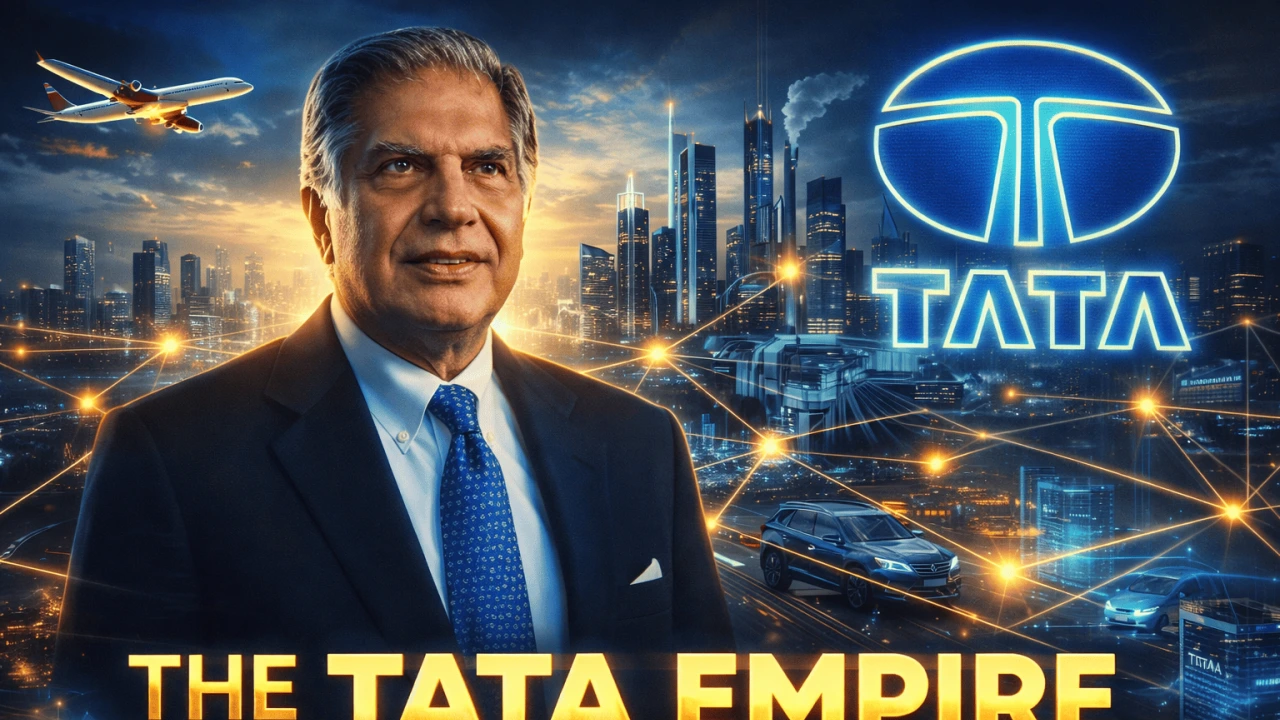
History of TATA Division
150 years ago a small cotton trader dreamed of changing India Completely unaware that one day his dream would give birth to such a business empire. Which will not only change India but will also win the hearts of crores of Indians. This is the story of Tata Group, get ready to be inspired. Er 1839 Jamshedji Tata is born Jamshed ji completes his education in 1858 And started doing cotton trading business with his father.
In the next 10 years, despite many difficulties, his business becomes very big. But Jamshed ji was not satisfied by trading only cotton. He wanted to manufacture clothes from dug cotton. Therefore in 1877 he set up the Empress Mill at Nakpur and Started manufacturing but there was a problem, the workers there were not very serious about their work.
Every day 20 percent workers were absent, took weeks off and were unable to work for long. Jamshed ji came up with an innovative solution for this, he created a provision for the workers, he launched the scheme of provident fund for the workers, which means now the workers were going to get pension after retirement, secondly he got the workers medical insurance done, and finally organized events like family days and sports days, the workers who performed well in these events were also rewarded in front of everyone, due to all these initiatives the workers started feeling very valued, due to which Both their attendance and performance improved significantly. The workers started feeling valued due to the initiative, which improved their attendance and performance.
Both of them improved a lot and many of these schemes were so futuristic that by then they were not adopted all over the world. In his eighties, Jamshed ji saw the growing demand for independence in India. Jamshed ji believed that to be independent and to sustain independence, India would have to become economically self-sufficient and all essential products would have to be made in India.
Therefore, he started building more Indian businesses in different areas. He first started strawberry farming in the mountains of Panchgani. The impact of which was that even today Panchgani is known for strawberry farming and jam factories. Jamshed ji also observed that the weather of Bangalore and Mysore is like France.
Therefore, he brought silk worms bred in France to India. He bought land in Bangalore and Mysore, started Tata Silk Farm Organization and got silk worm breeding done from local farmers. It was through his initiative that India got popular products like Mysore Silk and Bangalore Mysore Silk Saree. Jamshet ji loved his home town Bombay very much and knew that it was very important to have a world class hotel there for the development of the city.
Therefore, he started building The Taj Mahal Hotel in 1898. He personally participated in the construction and design process. His vision was that the hotel Every room faces the sea and guests feel as if they are floating in water. The hotel was built in 1903. Opened to the public for the first time, it became the first building in Bombay to have lights and electricity.
Jamshed ji took many other such initiatives but his most impactful initiative was to start a steel business. Steel was needed to develop every industry in India like construction, railways and manufacturing. Therefore his dream was to open a steel plant in India itself. He spent 17 years of his life in finding high quality iron ore in India.
Because iron is the most important raw material for making steel, But sadly, Jamshed ji had to face continuous failures because iron is the most important raw material for making steel. faced continuous failures Then ultimately in 1899 them in Bengal province rich iron ore reserves found After which he immediately started iron ore mining.
and setup a steel plant started but unfortunately Jamshed ji himself in India through his own eyes Couldn't see steel being made Because he breathed his last in 1904 at the age of 65, Jamshed ji's vision was that he could not see steel being made in India with his own eyes. Because in 1904, at the age of 65, he breathed his last.
Jamshed ji's vision and his dreams were so grand that it was not possible for them to be fulfilled during his lifetime. Therefore, his son Turab ji Tata took the responsibility of fulfilling all his other dreams. Jamshed ji believed that India was far behind western countries in scientific research and education.
He wanted to establish such an institution in India that would produce world class researchers and scientists. Therefore, Durabji Tata took the help of the Maharaja of Mysore and established the Indian Institute of Sciences in Bangalore in 1909. Nobel Laureate CV Raman became the first director of ISC. Going forward, ISC has made significant contributions in the development of India's first super computer, Param and India's first indigenous aircraft, Da Hansa. It wants business leaders who can take the country's economy to the next level by building businesses.
And to make these business leaders Recently an innovative in India business school has opened such a business school where students get such CXOs and business leaders will teach Who himself founded companies like Uber and Myntra business worth thousands of crores for I'm talking about scalar 18 months of School of Business post graduate program in management and tech students here Will have to work in such real world projects Which are from real companies themselves Will source our own building business here curriculum
Will be a plus to your business Fund raising by pitching to VCs Scaler will also get opportunity education industry since last 7 years and so they already have There are more than 1200 placement partners, this is something that no other business school is currently offering, you will get the opportunity to be placed in leadership positions with these partners and there is a mandatory internship of 3 months, Scalar has achieved 96% placement rate in its online programs and the median CTC is 25 lakhs.
currently scalar school of business Starting in early September For your founding cohort Only 75 students are going to be handpicked. The best part is that if you apply now You can also get scholarship up to 100% So just given in description or comment section link to scalar school of business apply now let's come back to the story Apart from education, Jamshed ji has also used the link to generate electricity. Apply for Scaler School of Business. Now coming back to the story, apart from education, Jamshed ji.
Had ever dreamed of a hydro electric plant to generate electricity. Goha in this project Power generation was to be done by using Dudhsagar Falls located on the Maharashtra border. Dorab ji involved 7000 workers and got artificial lakes, dams and channels built. The plant was ready in 1911 and you know this power by the name of Pagar. Finally, Durab ji Tata also took the responsibility of completing the work of the steel plant which was started by Jamshet ji. In 1907, he To establish a limited company and for the steel plant
IPO of Rs 23 crore announced At that time due to the Swadeshi movement Nearly 8000 in just two weeks people invested in it Company Name Tata Steel and Iron Company i.e. TISCO was kept and finally in 1912 By producing the first steel from TISCO It came out only after two years In 1914, World War I started and Britain's steel demand suddenly shot up. They needed steel for tanks, trucks, railways. TISCO's plan worked day and night and fulfilled this demand. After the end of the war, the Viceroy of that time acknowledged the contribution of TISCO and the town where TISCO's plan was located was named after Jamshed ji. up jamshed
Pur and the name of the railway station Tata Nagar was kept as Durab ji's. Tata Group's business in leadership had increased many fold in 1932 Durab ji Tata died And before leaving he told Tata Group Steel, Power, Consumer Products, Businesses like banking and insurance Durab ji Tata had diversified into businesses like banking and insurance. After Dorab ji Tata, a young member of the family, Giordi Tata, became the chairman of Tata Group in 1938.
Giordi Tata had joined the business in 1925 and was learning work in the TISCO plant. He was always very interested in aviation, so in 1932 he started Tata Aviation Services, which became the first airline in India to provide passenger and cargo transport services. Its first flight was flown by JD Tata himself. After which they had to import essential chemicals like India's first ever commercial pilot soda from outside, these were the chemicals which were used in making glass textile.
They were very important for making essential products like soaps and detergents. He wanted these chemicals to be To be produced in India only, that is why in 1939 he set up a chemical plant in Mithapur Town, Gujarat. Built and that's how Tata started Tata Chemicals which today also manufactures Tata Salt.
Chemicals business started doing well But JRD's dream was still to grow the airline business. During World War II the British Government seized all the planes. Due to which Tata Aviation Services closed overnight But as soon as the war ended, JRD decided to enter the airline business again. And this is how Air India started in 1946 Air India crew was known for their warm and attentive services.
The food, cleanliness and in-flight entertainment of their flight were all top class. Even their mascot was a Maharaja Which reflected the Indian hospitality and royal standards of the airline. Air India always operated as per the time schedule. Due to all this not only in India but also internationally Air India was known as one of the best airlines JRD was growing Air India like his own child.
But then something happened which took away this Air India from them in one fell swoop. After Independence, the Indian Government snatched away the Socialist Economic Model. After Independence, the Indian Government snatched away the Socialist Economic Model. Had adopted the one whose country was to be killed.
Important industries like Transportation Government Controls should be in so that these industries Pay more for public service than profit Focus and so in 1953 Nationalize Air India i.e. taken under government control Air India after nationalization A tragic decline has begun service, punctuality and safety negatively impacted due to which ultimately Air India has status of world class airline Lost but Air India's setback Even after GRD Tata No stone was left unturned to grow the group He saw that after independence
Any Indian in any country There is no cosmetics brand, so he saw that even after independence, there is no Indian cosmetics brand in the country, so he started Lakme. Lakme is a French word which means Lakshmi in Hindi. Jayadi deliberately did not give an Indian name to this brand. He knew that Indian women were inferior to foreign brands and considered foreign brands to be of high quality, so by naming Lakme, he took this cosmetics brand to the international level.
Gave aspirational value but in reality the meaning of Laker was still deeply connected to India. Apart from this, GE bought a railway engine manufacturing factory in Jamshetpur and started Tata Locomotive. And Engineering Company Limited, which was later transferred to Tel. Initially Telco used to manufacture steam engines only for railways but JIA soon expanded into truck manufacturing. He launched Tata 407 truck which became quite popular for its slim and strong design and captured 70% market share by beating the international brands. Today we all know this Telco company which manufactures engines and trucks as Tata. know by the name of motors
Apart from business, Giardi Tata helped India in its most difficult times. During the Indo-China War of 1962 and Indo-Pak War of 1965, he assured all kinds of support to the government. He sent Tata engineers to Delhi to provide military aircraft to the country. He used his Air India experience and designed the Indian Air Force.
year defense preparedness plan also made in this report signaling equipment Requirements for radar and spare parts were included by the government and the Indian Air Force. This report helped a lot considering the contributions of JRD Tata. The President of India also gave him the posting of Honorary Air Commodore in the Indian Air Force.
By 1991, Gerdy Tata had taken the number of Tata Group companies to 84. The revenue was Rs 24,000 crore and there were 2,70,000 employees. But now at the age of 87, the time had come for him to hand over the command of Tata Group to someone else. Therefore, Jerry Tata had appointed a promising member of the Tata family as the new chairman to hand over the command of the Tata Group to someone else, therefore, Jerry Tata chose a promising member of the Tata family as the new chairman and this new chairman was Sir Ratan Tata.
About 30 years before becoming the Chairman, Sir Ratan Tata was studying architecture in USA till 1962 when he received a letter from J. A. Tata in which he was asked to come to India and join the business. Ratan Tata came to India and founded Tata Steel. joined and was a normal worker there started working like Seeing his dedication and business talent They were given big responsibilities one after the other.
Started meeting before becoming Charmin He saved Empress Mill from losses. made profitable by extracting A major labor unrest in Telco was successfully resolved And Tata's NELCO company Which used to make radio and television etc. Its revenue is from 3 crores was increased to Rs 200 crore When Sir Ratan Tata in 1991 When he became a cherman he knew That Tata Group looks good from outside performing but in reality He was lagging behind in many things They felt that the Group was lagging behind in high technology like computing and AI and the Group was doing the same but in reality it was lagging behind in many things. They felt that the Group was lagging behind in high technology like computing and AI.
Like the group is far behind in computing and AE and the group has not done anything unique for a long time, that Tata He wanted to do something revolutionary for the group through India. With this mindset, he saw that India Ratan Tata did not have any car in which everything from design to production was done in India, so in 1995 Ratan Tata decided to make a 100% Indian car.
A car which is spacious, futuristic, affordable and gives high mileage, But there was a problem, The cost of setting up a new manufacturing plant was around 2 billion dollars, Which was a huge amount, That's why Tata Motors gambled, And an old Nissan plant in Australia was bought for a huge amount at one fifth the cost, so Tata Motors gambled, and an old Nissan plant in Australia Bought the plant at one fifth cost, By dismantling this entire plant Brought to India, and in Pune Rebuilt by Ratan Tata One of the best in designing your own car
Important rules followed, and finally car in 1998 Launched, this is an Indian car was, so to name it Indi was taken from Indian and Ka was taken from car and Indica was created by combining them Tata Indica Auto After Mobil, Ratan Tata focused on technology. He saw that the focus of TCS was in providing administrative services to Indian companies like data entry and book keeping which was a very basic level work, hence Ratan Tata shifted the focus of TCS from administrative services to software services. This was a very basic level work, hence Ratan Tata By shifting the focus of TCS from administrative services
brought to software services After which TCS India And even for the world's biggest organizations Started making customized softwares Ratan Tata also brought TCS IPO Due to which the company got funding to expand. And with these steps even today TCS is India's biggest IT company. After the success of TCS, Sir Ratan Tata focused back on Tata Motors.
He observed that the majority of India's middle class population cannot afford a car. That's why the whole family is forced to travel congested in a scooter. which was very uncomfortable and unsafe Sir Ratan Tata's dream was to make the Indian middle class transition from a scooter to a car, that is why he announced that he will launch a car whose price will be only one lakh rupees.
Keeping his promise, in 2009 he launched Tata Nano at a price point of Rs 1 lakh but unfortunately Nano proved to be a failure. The biggest advantage of Nano was its cheap price but this became its biggest disadvantage. In India, people see a car as a status symbol. Anyone who owns a car is considered successful.
But due to Nano's cheap price and its design, people have called it the world's cheapest car match box and even covered. Branded it like an auto rickshaw, where other car owners used to feel proud of their car, the same is true of Nano. Owners are worried about their car felt and hence nano Proved to be a failure but Tata Motors worried about this failure learned a lot about behavior Which can also be seen in their line up today Today Tata Motors is part of Tata Group.
highest revenue earner The company has finally become Sir Ratan Tata Deeply has become a high revenue earning company. Finally, Sir Ratan Tata deeply wanted that Indian companies need not just India Rather we should do business all over the world And so to expand into foreign markets They started acquiring foreign brands one after another Like to expand Tata Motors in the global luxury market They acquired Jaguar and Land Rover Acquires British brand Tetvar to expand in global tea and coffee market British brand Tetley to expand in global tea and coffee market
and US brand Eto Clock Coffee. acquired Similarly every major company of Tata Like Tata Steel, TCS, Tata Chemicals And I&C L also made acquisitions And today because of these decisions More than half of Tata Group's revenue comes from outside India Under the leadership of Sir Ratan Tata, the Tata Group has earned more revenue from outside India. The list of what the Tata Group has achieved under the leadership of Sir Ratan Tata is very long, whether it is Titan making the world's slimmest watch, TCS making the world's one of two most powerful supercomputer or disrupting the television market by launching Tata Sky. Tata Group has achieved success in almost every area. Sir Ratan Tata says that If you want to go fast then go alone but if you want to go far then take everyone along. Tata Group has always done business with this philosophy. On one hand it has built big companies and on the other hand it has also built schools, colleges and hospitals. Tata Group has always walked along its investors, its employees, its customers and ultimately its country.
And that is why today he gets many times more respect from people than whatever success he has got.

Want to start an ecommerce business in India?
What is Ecommerce?
Ecommerce is known as internet commerce which products or goods will sell or purchase through online medium in which sellers can sell and buyers can buy their needs. Ecommerce plays a major role in boosting economy valued around $125-$148 billion in 2024, with projections to hit $340-$380 billion by 2030. Due to huge demands of online products or services major companies goes online to scale their business. It helps to generate major revenue and it is opened 24*7 users can anytime book their orders for products or services.
Features of Ecommerce:-
Variety of Products:- in any platform for ecommerce it has many variety of goods with many ranges and they can compares to find best with their needs.
Emi facility:- In shopping platforms they are now providing shopping with emi facilities with their banking and fintech partners. So it increases sales of businesses with flexible rate on interest on emi with autopay features which can deduct from their bank accounts.
Wide ranges:- products has wides ranges based on classification from low to high, colors ranges as white, black, blue, green, yellow, etc with brands selection as many listed brands as nike, puma, adidas.
Wide Categories:- now platsform provides wide ranges of multiple categories as fashions for mens, womens, childs, etc , shoes with various brands with multiple types, electronics and accessories as laptops, spare parts as cpu, ram, hardisk, etc.
Returns:- these platforms provides return features in which users can returns the products if they are not satisfied with quality, size, color, defective as expected you can return easily.
Refunds:- whenever your order products get returned it will get refunded within defined duration in amazon 5-7 days in some case.
How to Start business Online?
When yours platform is growing and stable then you con thought about other business that is the process how enterprise works as Adani Groups, Reliance Groups, Zoho Corp, etc. you have to be success in one domain then you have to go in another domain. Never do multiple businesses in first one is not stable it will lacks in failures as Anil Ambani done due to opening of its multiple businesses in meantime. Every businesses should follow pipelines to grow their business with their teams. Teams is major core part of yours business which helps to scale with their expertise, feedbacks, leading in a way the usp matters. When company grow you should focus on culture that really matters how you treat them. If you understand yours employee problems and customers issue you will definitely build the business.
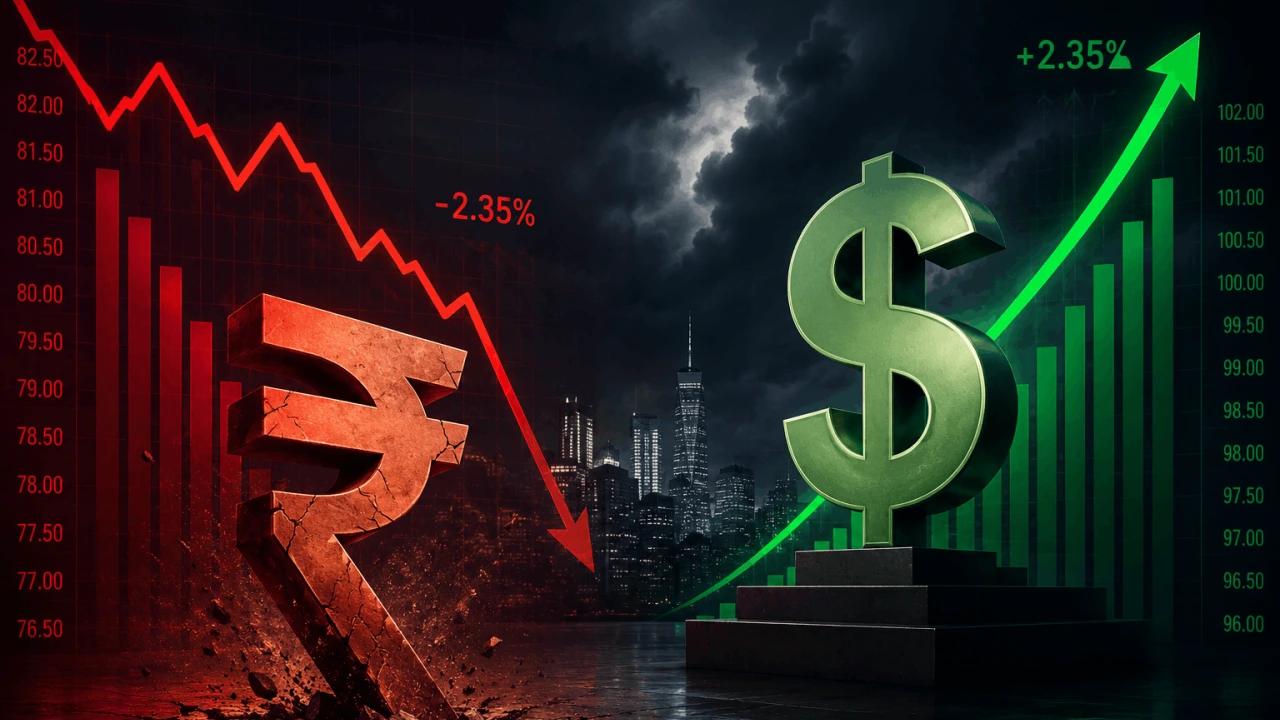
Indian Rupee Falls Against US Dollar: Impact on Indian Economy in 2026
Welcome to all of you on Bindaas bol dil se. Discussion about rupee, rupee is not able to stand against dollar So badly battered that every day is reaching a new milestone If you go to buy one dollar in rupees, now you will get it for 96 rupees. That means the dollar has stood very strongly against the rupee.
If we talk about today's rate, then this one dollar has been bought for 96.90 rupees. If we talk about today's rate, then this one dollar has been bought for 96.90 rupees. American is the currency of a country whose name is America. Rupee is the currency of a country whose name is India. Why did India's currency become so helpless in front of America's currency? Indians around the world Did this happen with currency only or is this happening with other currencies around the world? We will also know in today's session.
We will also know what are the main reasons behind the strengthening of the dollar and the decline in the rupee. And why does the Reserve Bank of India not do anything because it is ultimately the responsibility of any central bank? That they control inflation, maintain the circulation of rupee, regulate foreign exchange reserves, then is RBI failing? Let us discuss all the things one by one. One dollar could be bought for 69 rupees. Today it is being sold for 96 rupees. The dollar has continuously strengthened. The rupee has continuously fallen. Is India's economy continuously falling in front of America?
Let's try to understand, first know the update that in the year 2026, where 1 dollar was getting 89 rupees, today it will get 6-7 percent weakness but it will stop in 2026. In such a situation where the dollar has fallen so badly, if we talk about the dollar bank in India, if we talk about the foreign currency bank, then you will have to see those figures too. Our dollar is compared to our rupee. You will ask how our dollar came to be. Actually, you have it with you. Why do you have to keep dollars? Because if you have to do business with the world, you have to do it in dollars only. Which business should you buy something like oil? Let me put a figure in front of you. When India imports crude oil, it buys oil worth 174 billion dollars. Sir, oil can be bought in any currency. Why not buy it in rupees? Why not buy it in the currency of that country? America had once made a petro dollar agreement with OPEC countries that you will sell oil but you will get it in dollars.
If we have to take payment then what should we do? We have rupees but we have to buy dollars from the market. It is necessary to buy dollars from the market first, to buy oil, then it is a matter of buying dollars first and after buying dollars, when you keep it with you, you will say in which dollar do you buy it. The big question is, if you want to buy dollars in rupees, then what will the other person do with your rupees? So sir, you first buy dollars in gold or buy gold with rupees and then buy dollars with gold. Overall, the first task is to buy dollars, then buy dollars and make payment with it, then ultimately.
The demand for dollars starts increasing in the world. When oil becomes expensive, the demand for dollars automatically starts becoming expensive. If you wanted to buy oil, the road is closed, oil will be expensive, how much will the oil cost, sir said, it is so many dollars. Like 110 dollars per barrel earlier short dollar per barrel now 110 dollars per barrel said 60 dollars per barrel, now 110 dollars per barrel, said what to do with this increase, said this is the increase, now you will have to bring more dollars to me, so now if you bring more dollars to them, then you will have to buy more dollars, so you go out to buy dollars to fulfill your needs, and the market As the demand for the dollar increases, the dollar stands strong, I will show you the figures, you buy crude oil worth 114 billion dollars, electronic goods worth 116 billion dollars, gold worth 72 billion dollars, machinery worth 62 billion dollars, and other metals worth 29 billion dollars, this is approximately 450 billion dollars, what is the foreign exchange reserves with India, 690 billion to 450 billion. billion dollar is your annual budget, i.e.
If the foreign exchange reserves are imports are not happening, If we make money by selling goods You are earning, whatever we have People who have gone out of India, You are not sending it to us after earning it. If India sells services If by selling services If you are not earning dollars, then our When will this reserves get shaken, if you look at China, it is standing at number one, if it is not earning dollars by buying foreign currency, then how long will our reserves get shaken.
If you look at China, it is number one But standing in terms of foreign exchange reserves A question will come to your mind here If America's name should be there then it should be America's name. The world has its own currency No matter what the crisis, the currency dollar shines. Because he has decided that you will get the dollar If you want to buy and sell in dollars, then there is no problem for him, all the money is his own, brother, in such a situation, today China is sitting with dollars with quarter to four trillion dollars, due to which it is progressing safely. India is standing with 690 billion dollars, of which 450 billion dollars is the main item in which we have to make payments, there are payments for the needs, there is no talk of trade, we are talking about the needs. So in such a situation, when the demand for dollar increases, then the dollar stands firmly in front of the rupee, and this is the reason why gold also appears expensive to us, by exchanging the commodity, the commodity makes us buy gold, along with gold, then we buy dollars, then it is a vicious cycle, and if we notice this cycle, between 2014 and 26, it was worth 69 rupees in 14, today with a fall of 64%. Filler is visible, if we notice the economists, then between 2014 and 26, it was Rs 69 in 14. Today, filly is visible with a fall of 64%. If we listen to the economists, then the effect is such that if the dollar continues to fall in this manner, then our import bill is due to fill. Our trade deficit has started increasing, meaning our expenditure on oil has increased by about 38 billion dollars in the last 3 months or we can say that we have By spending too much, trade deficit has been created.
Why, because goods became expensive in the world, Traveling on the road has become expensive. The vehicles that are coming, the ships that are coming to India with goods, their oil has become expensive, due to the inflation of oil the entire system has gone haywire. And its effect is in front of you, आज जब विदेशी मुद्रा बंडार की बात करते हैं तो वो तीन महीने के अंदर 38 बिलियन डॉलर हमारा विदेशी मुद्रा बंडार घटा है यहाँ पर आपको मैं का आकड़ा दिखाओं तो अकेले मैं 8 बिलियन डॉलर का विदेशी मुद्रा बंडार घटा है बात करी जाए विदेशी मतलब विशेशग्यों की तो विशेशग्यों का यह मानना है कि यह गिर करके हो सकता है 100 रुपए तक भी चला जाए और यह 100 रुपए तक का इस तर पहुँचना कोई बहुत बड़ी करांतिकारी खबर नहीं This news will remain even if it reaches here and this Rs 100 reaching this direction will not be a big revolutionary news.
It will be considered in the expected news that this was bound to happen, now a big question arises that sir, if this Recently, the rupee has been falling, so what difference does it make to us? For us, it was the same. See, the foreign exchange reserves are getting reduced everywhere. This simply means that you have reduced your foreign reserves, which was necessary for you from the security point of view. It is only the foreign exchange reserves that enable you to buy goods from the world. If you do not have foreign exchange reserves, then you will not be able to import the things which are needed today, like today we talk about oil, then the foreign exchange we need to buy oil is this. It is determined by the foreign exchange reserves. If we are not able to buy oil, then the demand is at the same place. If the supply of oil will not be there, then the oil prices will increase, which is seen happening. The increase in oil prices increases inflation, so overall the foreign exchange reserves come to you in the form of inflation. When inflation starts increasing, due to increase in inflation, you start avoiding buying essential goods. When you do not buy essential goods, the goods manufacturer starts avoiding making goods. When he starts saving, he reduces the production. When the production decreases, an employment crisis arises because people are fired from the job that when the goods are no longer being made and are not being sold, then why should I hire you? From there, people are fired from employment. On one hand, employment crisis arises, on the other hand, inflation is hitting, demand is ending, employment crisis is happening, production is decreasing, inflation and this vicious cycle is created, which leads to an overall recession.
This means that the value of the dollar is continuously increasing and the rupee is falling, this is not just news. If this news continues to have the same intensity. And if the foreign exchange reserves continue to decline at this rate, then there may be a sound of an economic crisis for India. We have said such things to you multiple times.
Former RBI Governor D Subba Rao also said these things in this manner. There are many reasons for the decline in rupee He even explained the reason and said That the foreign investor is not able to see hope in India India is not seeing this market rising. There are many reasons behind it Out of that, technology itself is becoming a big reason that in India Innovation centric growth has not been seen the way the promising markets of the world have seen some markets like semiconductors and others.
Made AI as its theme, that innovation led growth was not seen in India, due to which investors have continued to leave and when When the investors went, they took with them the foreign exchange reserves in large numbers because the foreign institutional investors i.e. FIIs who come to us are starting to withdraw money from the FII market. In their outgoing money, dollars are going along with them, so how did many of our currencies become due to which the demand for dollars is getting eroded. Due to this, the rupee is facing problems. Due to this, the result is increase in oil prices, increase in the prices of essential goods, fear of inflation, cost of education in foreign countries, cost of electronic goods. All these things happen due to them becoming expensive. Some people will also find benefit in this that if the rupee is weak against the dollar then Indian goods will now be cheaper for the Americans.
If it is needed then our exports will increase, in reality we need dollars, the benefits are not in favor of India. They are in favor of China, that is why China deliberately lowers its value against the dollar, it depreciates so that its value falls, He devalues his value, we will discuss on that, but for the filial, a big question arises here, And that is, what can be the ways to deal with it, see the way the Indian market is looking, the question arises on investment and that is what can be the ways to deal with it, see the way the Indian market is looking, investment also raises the question as to where a person should invest. Today there are so many investment options, whether you look at bonds, look at gold, look at stocks, look at real estate, either it is in the grip of inflation or is in fear of borrowing. If we look at the situation after the war, Nifty has been seen falling by 7%. In the last 6 months, a fall of 10% has been seen in Bombay Stock Exchange and 7% in National Stock Exchange.
That is, whether it is war time or Trump time, there is a decline in the market, then there is a fear among the investors as to where to invest the money. At the same time, if we see the same situation in the case of gold also because now the Government of India is saying that do not buy gold, then when the Prime Minister stops buying gold, then people avoid investing in gold because all kinds of duties are imposed on it. To deal with inflation, what to do when there are no stocks left and you also have gold options. But if the government is challenging then how can we deal with inflation because inflation will increase very fast in the coming time. At this time, you should give place to savings in your practice. Give place to the conventional method which is being used. In many conventional methods, I have already told you about fixed deposit and recurring deposit. I have told you that either you deposit your money in the bank and let it run on interest because it is the safest. Apart from that, the second thing is that I do not have a big amount of recurring deposit in the bank. Deposit your money and let it run on interest because it is the safest. Apart from that, the second one is recurring deposit. If I do not have a big amount, then you make a monthly SIP like this. Just set some of your deposits on a monthly basis that I will deposit Rs 1000, with this you will be able to meet the needs of the future whether you have to repay the car loan, pay children's fees or go out somewhere, any of yours.
Do you have any plans for the future if you want to do that? So make this your saving habit. Advise if you have money at this time Didn't invest anywhere to save This is a big challenge with money The soiling effect applies if you Keep money in your current account without payment Without interest, then it is becoming mud in front of inflation, inflation is increasing at its own rate, now when the CPI figures will come out, the way WPI has increased, if CPI increases, then the inflation figures will not be able to beat even our interest rate, so in such a situation it is important that if you have any outstanding amount, you should adopt it as a saving method, and if you do so then you can keep it in the recurring deposit. Okay, so overall you can use your savings in many ways if you get RD done, check is car down payment, wedding fund, wedding fund, there are many travel funds, you can manage them and for this I am suggesting a very good app, its name is Stable Money, whose image you are seeing running in front of me here, here you can check which bank is giving you the best interest rate on RD, you can check it with that interest rate. Choose, there are many banks which are suggesting interest rate above 8%, you can choose them, you can withdraw an amount as soon as your salary starts, if you are getting RD at such a good interest, then you can get it done at such a good interest by withdrawing an amount as soon as your salary starts.
If you are getting a Audi then you can get it done, to what extent you can get it done and how much money you want to get it done, then see inside India. DICGC is an initiative of the Government of India which provides you insurance up to Rs 5 lakh through DICGC, a subsidiary of RBI, that is, if you have deposited money in any bank, where is your security, then up to Rs 5 lakh, DICGC, which is a subsidiary of RBI, provides that security, so it is a safe investment for you.
You can check your interest rate in more than two banks to see which one is the best. You can start your SIP with Rs 1000, One more point I would like to tell you here, the best thing you will get in case of stable money is this, That you should not assume here that in RD you were making regular RD of thousand rupees, Suddenly one day you will have more money, ten thousand ahead, twenty thousand ahead, You can top up that fund at the same interest rate at which you had initially booked the RD, meaning you have added the amount.
At the old interest rate which you had booked, which was the best rate, It is possible that later the interest rate will change due to change in repo rate. The reduction remains to be seen, but you can book your RD at the old rate also. Second, if any of your RD switches, meaning it happens that it gets skipped, If I can't do it, you don't face any penalty.
like this and the third You can use it whenever you want So these kinds of facilities that you You will definitely find it on this app Check I have added the link inside the comment box. It's pinned here, take care. The pen card is your insurance. It is given by DICGC which is a RBI Subsidiary. Okay, you must go and check it. I have given the link in the comment box. Now the question arises that what are the other factors which are responsible for the loss of foreign exchange reserves at the speed with which India's foreign exchange reserves are going? So as I told you, Rs 2.2 lakh crore was withdrawn by the foreign investors. The reason behind the flight of the investors was the growth rate of India, that sir they saw that thing and the money was withdrawn by the investors. It was said that India's growth rate was the reason behind the flight of investors, that sir, they are not seeing what is being seen in the global markets, as well as the trade for India, our imports are becoming expensive, our trade with China has now reached the dangerous level of deficit of 100 billion dollars, if we reduce their exports, if we are importing more, then our excess dollars are going there too, just like in the Gulf countries. There is instability in the remittances that used to come from there, there is a problem these days, so the problem of remittance has become bigger for us. If we talk about the strength of the dollar, then on this side the international demand for the dollar has increased, the dollar is getting stronger, so overall there is a decrease in private investment in the economy, domestic people are avoiding consumption, they are afraid of manufacturing, overall lack of investment in technology, all this is affecting us. It is visible on the growth rate of India, if all this continues then it is possible that in the coming time, India will see more strength of dollar. Now the biggest question is that why don't we make the rupee stand firmly in front of our dollar, why don't we say that one dollar will be worth one rupee, we will not talk about it.
Why don't we do this? In reality, you want dollars, America does not want rupees. You want dollars, it means you have gone to buy dollars from the market. Bik is saying at the international level, whoever has dollars, you should take it. It means you have gone to buy dollars from the market. Bik is saying at the international level, whoever has dollars, you should take them.
So what will you offer in return to someone who has dollars? You will say, take the goods from us, you should also have the necessary goods. Today, when Russia says to you, 'Take oil, sir, take oil', you are not able to give it jaggery in return. Why can't they give because they are purchasing cheaper goods from China? You did not provide a good alternative to the market. The result was that you are lagging behind the world in manufacturing supply chain.
So people can take money from you, but we are not able to provide such a system that we can buy goods from you in exchange of that rupee. If you say no sir, I will make the rupee equal to the dollar, then you will not find anyone to sell the dollar, it is like I will buy a stock, Mali ji, is it a big stock, Mali ji is the stock of Indigo, I will buy it for one rupee, a lion will be worth one rupee, so keep thinking that to give it to you, you have to trade in this market, you have to put your price in someone to give it. It will give you the desired, it simply means that your rupee does not have that strength. When will the strength come when you have a lot of ready-made goods? The stronger India is in the supply chain, the stronger the rupee will be. Today, when we are dependent on China for ourselves, we are taking imports worth more than a hundred billion dollars from them, this shows that it is very important for India to concentrate on manufacturing.
If we consider this battle of dollar versus rupee for filial on fixed and floating, then India has adopted floating exchange rate, it has been adopted based on demand, with that only India can do business at the international level. Does India also run pegged with anyone i.e. fixed? Nepal has settled with India in dead rupee This is how Gulf countries interact with each other Countries with which there is not much trade Or to whom you can give something in exchange They are also adopting such exchange rates
If you like our premium content to get updated, subscribe to us at bindaas bol dil se on youtube.com and other social media handles.
Trends that Transforms Nation:- Exclusive news coverage 24*7 With Bindass Bol Dil Se. Follow us and get updated in runtime with our networks.